

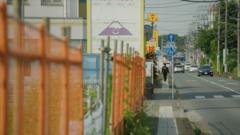
Fujisawa, a seaside community south of Tokyo, is experiencing significant social debate following announcements to construct a mosque in the town. The proposed religious facility has prompted varied reactions among residents, ranging from acceptance to apprehension about community changes. Earlier this year, anti-mosque demonstrations occurred at a local train station, with thousands of residents expressing opposition to the construction project. Some critics have raised concerns that the mosque’s size may be disproportionate compared to nearby Japanese religious structures.
The situation has revealed concerning trends in online discourse, with reports of hate speech and misinformation circulating on social media platforms. Islamic organizations have reported receiving hostile communications, prompting civil rights groups to organize counter-demonstrations advocating against hateful rhetoric. However, perspectives vary among local business owners and community members. One coffee shop proprietor near the construction site expressed openness to dialogue and understanding, advocating for residents to learn more about Islam and Muslim communities before forming judgments.
Muslim residents and community leaders have reported experiencing increased hostility in recent years. Mohamed Mohideen, a long-term resident who emigrated from Sri Lanka decades ago, described encountering negative comments online and in-person harassment directed at Muslims. Despite these challenges, he has emphasized that patience and respectful engagement remain important approaches. Another community representative, Shakeel Mohamed, stressed the importance of adhering to local customs, rules, and social courtesies as part of community integration efforts. He acknowledged that while some individuals from any group may behave inappropriately, such cases represent minorities rather than defining characteristics.
The Fujisawa controversy reflects larger demographic transformations reshaping Japan. The Muslim population in the country reached approximately 420,000 by the end of 2024, nearly doubling from 230,000 in 2019. This growth accompanies broader immigration trends, with the foreign resident population surpassing four million in 2025. Japan’s government has historically avoided characterizing the nation as an immigration country, instead promoting temporary visa arrangements. Recent policy decisions, including a fivefold increase in visa fees announced in June 2026, suggest a more restrictive stance on immigration despite continued labor market needs.
The underlying debate in communities like Fujisawa centers on fundamental questions about national identity and social cohesion in an increasingly diverse society. Japan faces competing pressures: economic necessity for immigrant workers and demographic decline, alongside concerns about preserving cultural continuity. Some residents, when reflecting honestly, acknowledge that their concerns may stem from unfamiliarity rather than personal negative experiences with immigrant neighbors.
Article Attribution | Read More at Article Source
Article summary produced by Claude AI