

Burnsville, North Carolina’s fire department will soon install solar panels and battery storage as part of a statewide microgrid initiative supporting hurricane recovery efforts. The fire station, which served as a critical community resource during emergency operations, currently depends on generator fuel for backup power during outages.
The North Carolina Department of Environmental Quality allocated $5 million last August to support 26 microgrid projects in partnership with nonprofits focused on renewable energy expansion. The initiative aims to construct 24 stationary microgrids and two mobile systems, with five stationary sites identified in June. Similar resilience projects have emerged in other storm-affected regions, including Puerto Rico and New Orleans, where communities have developed solar and battery systems to maintain power during severe weather events.
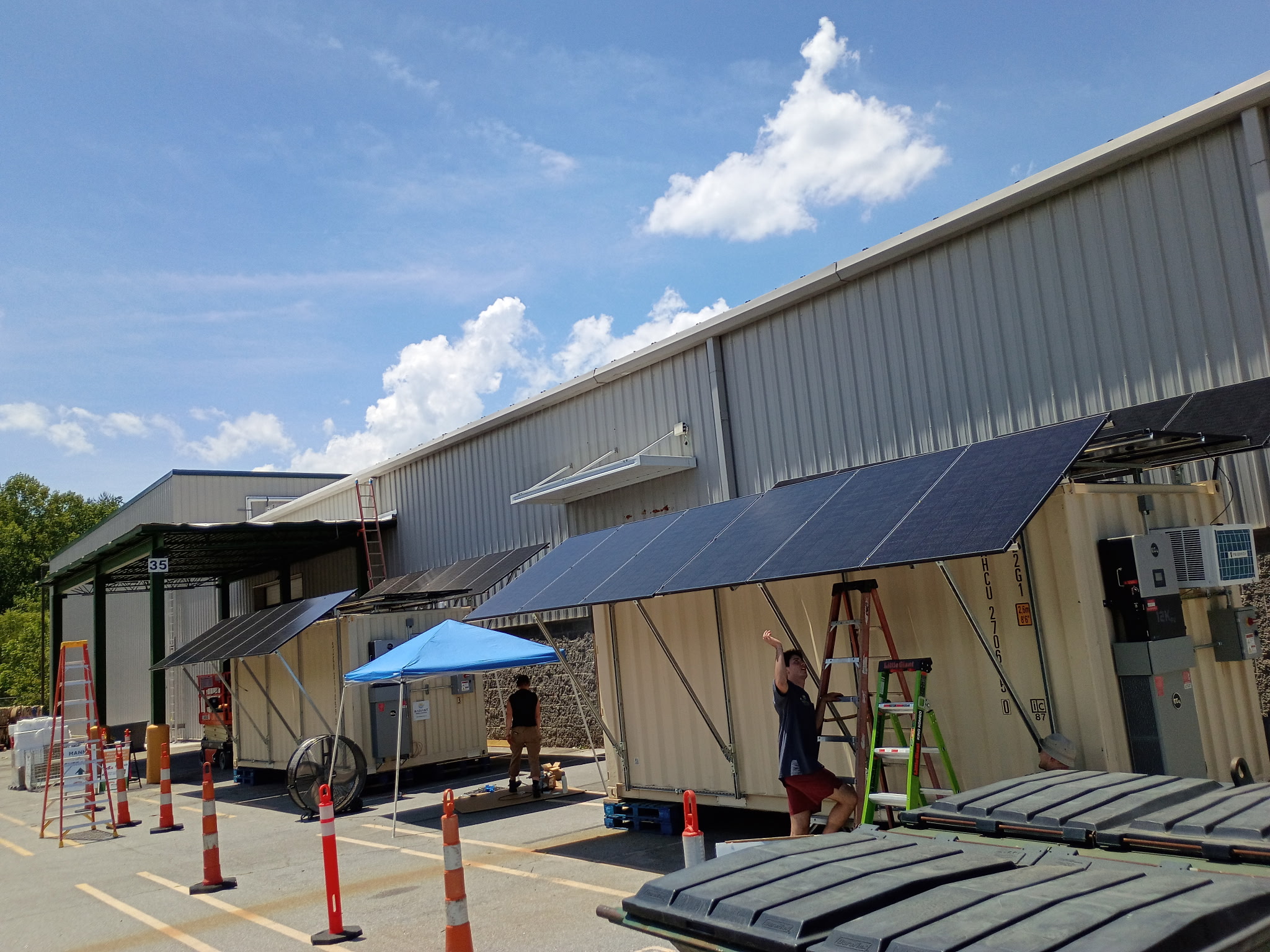
Stationary microgrids can power multiple buildings and store energy in large batteries for extended periods without sunlight. Mobile systems, which nonprofit Footprint Project refers to as “bees,” are trailer-mounted units equipped with batteries that function in various weather conditions. These portable systems provide up to 100 kilowatt-hours of energy and can sustain large facilities for approximately 10 hours. Specialized variants include “cooler bees” with refrigeration for medications and food, “power bees” offering device charging stations, and “water bees” providing filtration capabilities.
Installations are planned at fire stations, food banks, community centers, and libraries to serve as emergency hubs. Two mobile trailers are expected to be deployment-ready in 2027, while work at five stationary sites is scheduled to begin later this summer. Project leaders view the initiative as a demonstration model for broader renewable energy adoption across North Carolina and nationally, particularly as federal solar accessibility has declined. State officials are exploring expanded climate resilience measures throughout the region, though additional funding requests have faced budget constraints.