

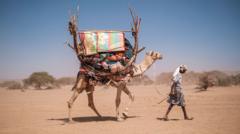
Livestock herds across Africa are experiencing severe mortality due to extreme heat, with camels—traditionally viewed as heat-resistant animals—proving vulnerable to unprecedented temperature increases. In northeastern Ethiopia’s Afar region, camel herders report significant losses, including eight camel calves lost in the past month to extreme heat stress. One herder with approximately 500 camels described visible suffering including blisters on feet, watery eyes, and burned skin. He noted that even wind patterns have shifted to carry heat rather than cool air.
Research across the region documents the scale of the crisis. A 2025 study of camel herders in southern Ethiopia found that high temperatures and climate variability negatively affected herd health, productivity, and reproductive performance. In Somalia, research published in June showed that nearly 46% of camel-owning households experienced drought-related mortality, with some northern regions reporting mortality rates near 73%. Veterinary officers in Kenya report a more than 15% increase in camel deaths over the past two years, with rising cases of hyperthermia leading to multiple infections.
Scientists explain that while camels can tolerate temperatures up to around 40 degrees Celsius through physiological adaptations that minimize water loss, current conditions frequently exceed this threshold. Summer temperatures in the Sahara now regularly surpass 50 degrees Celsius. Heat stress at such levels damages immune systems and white blood cells, leading to reduced food intake, weight loss, decreased milk production, and reproductive disorders. The effects compound when combined with vegetation loss, water scarcity, and limited veterinary services.
The broader climate pattern shows North Africa experiencing the fastest warming among African regions at 0.43 degrees Celsius per decade between 1991 and 2025, according to the World Meteorological Organization. Multiple countries reported temperatures exceeding 50 degrees Celsius in 2024. Some herders have permanently abandoned traditional northern pastoral zones for southern regions with better water and vegetation availability, marking a significant shift in long-established practices.
Experts indicate that while camels remain crucial to pastoral livelihoods in arid regions, current heat intensities threaten their survival and utility, potentially destabilizing economies dependent on camel herding across North Africa and the Horn of Africa.
Article Attribution | Read More at Article Source
Article summary produced by Claude AI