

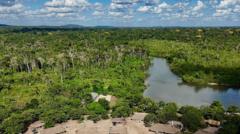
According to monitoring group MapBiomas, Brazil’s Amazon rainforest saw a substantial reduction in burned area during 2025 compared with the previous year. The 3.1 million hectares affected represented the smallest extent of fire damage recorded since the organization began tracking deforestation in 1985, significantly lower than the record 15.8 million hectares burned in 2024.
The decline extended beyond the Amazon to Brazil’s broader landscape. Approximately 12.7 million hectares burned across the entire country in 2025, compared with 30 million hectares the previous year. The 2007 figure of 30.7 million hectares remains the highest recorded since tracking began.
Researchers attributed the improvement partly to favorable weather patterns. The shift from warm El Niño conditions in 2024 to cooler La Niña conditions in 2025 helped suppress fire activity. MapBiomas reported that 2025 saw the lowest number of fires in the Amazon over a 41-year period. Vera Arruda, a researcher at the Amazon Environmental Research Institute and MapBiomas coordinator, told the BBC that while the 31 percent drop from historical averages represents positive progress, sustained prevention efforts remain necessary.
The figures carry political significance for President Luiz Inácio Lula da Silva, who pledged to protect the Amazon when campaigning four years prior and faces re-election in October. His administration has sought to reverse deforestation patterns that accelerated during his predecessor Jair Bolsonaro’s tenure. However, environmental groups have criticized certain government decisions, including approval of oil exploration at the Amazon’s mouth, as inconsistent with broader conservation commitments.
MapBiomas cautioned that natural climate cycles pose ongoing risks. The potential return of El Niño patterns later this year could extend dry seasons and elevate forest fire danger, underscoring the persistent vulnerability of the world’s largest tropical rainforest despite recent improvements.