

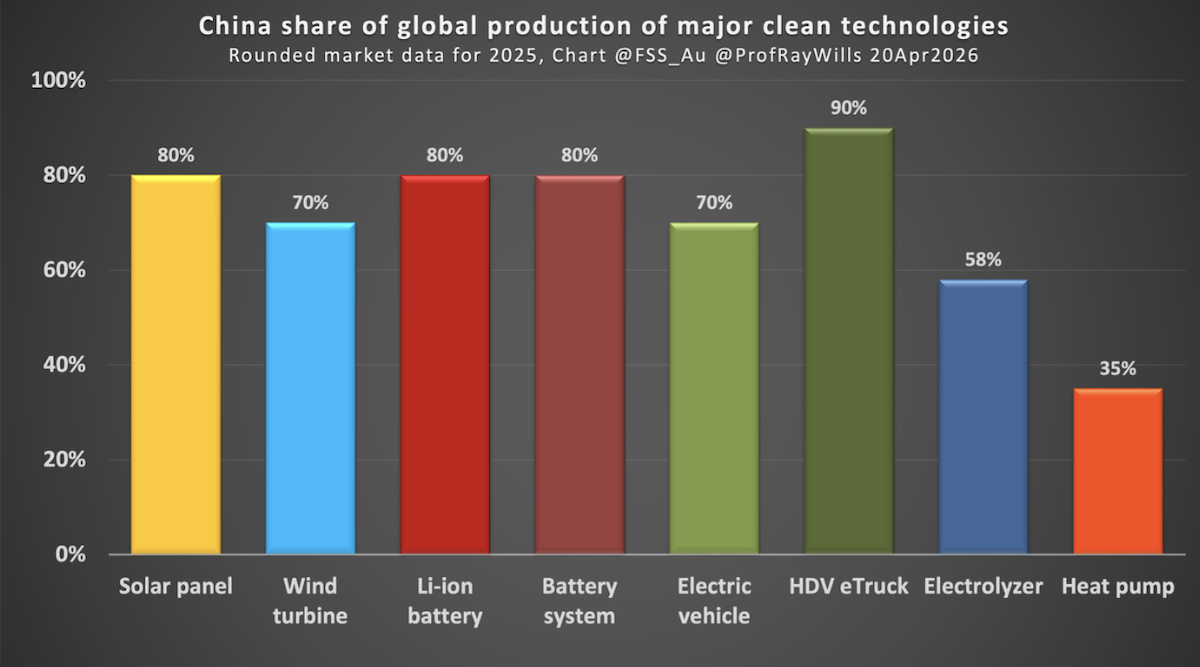
China is undertaking a comprehensive transition in its heavy freight sector toward electric drivetrains, marking a significant structural shift in global energy consumption patterns. The country’s policy framework aims to achieve approximately 40% new-energy heavy-truck sales by 2030, concentrating roughly 1.6 million vehicles in operation and targeting 18% of highway freight volume within commercially active fleets. This approach differs fundamentally from simple vehicle subsidies; it represents an integrated redesign of freight infrastructure along designated corridors.
The electrification strategy focuses first on converting trucks with the highest utilization rates and fuel consumption, including those operating in ports, mines, and steel mills. Data from 2025 and 2026 indicate that electric vehicles already captured about a quarter of new heavy-truck sales in these high-utilization segments, with penetration continuing to rise. This concentrated approach enables a minority of vehicles to eliminate a majority of diesel consumption by operating longer hours and repeating consistent routes.
Analysts note that falling fossil fuel consumption in China has sometimes been misinterpreted by Western economists as evidence of economic weakness rather than deliberate structural transformation. However, the International Energy Agency has revised its outlook, now expecting Chinese oil demand to peak this decade based on weakening road-fuel consumption and economic restructuring. China added nearly 6 million barrels per day of predicted oil demand growth over the past decade through vehicle expansion, but this trajectory has been deliberately altered through policy-driven electrification and modal shifts involving electric vehicles, liquefied natural gas trucks, and high-speed rail.
The Chinese model’s success relies on integrated industrial geography and regional clusters centered in locations like Changsha and Guangzhou, where manufacturers coordinate truck production with charging infrastructure, battery-swap stations, and grid planning. Other nations seeking to replicate this approach face challenges, as treating electrification as merely a vehicle purchase problem rather than a systems-design challenge may prove insufficient. For regions like rural Australia, the implications are significant, as increased Chinese diesel displacement could affect global fuel availability and pricing, creating competitive disadvantages for fossil fuel-dependent agricultural and regional economies.
The distinction between structural demand plateaus and delayed contraction in import volumes remains critical for investors and planners. While China’s crude imports remained elevated at approximately 11.55 million barrels per day in 2025, underlying demand for gasoline and diesel has weakened through electrification and freight-system redesign. The challenge for Western nations involves recognizing this transformation as an immediate planning priority rather than treating it as a distant development.
Article Attribution | Read More at Article Source
Article summary produced by Claude AI