

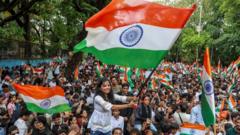
Education Minister Dharmendra Pradhan stepped down following sustained protests by young Indians, constituting an unusual development during Prime Minister Narendra Modi’s tenure. The resignation came after more than a week of organized demonstrations that gained momentum following a major scandal involving India’s premier medical entrance examination. The NEET test was cancelled in May after a question paper leak, affecting nearly two million students and resulting in over 20 suicides. The protests were mobilized through the Cockroach Janta Party, an online satirical campaign that organized demonstrations demanding Pradhan’s removal, education reforms, and compensation for bereaved families.
The movement gained critical mass after a notable incident on July 18 when police hospitalized hunger-striking educator Sonam Wangchuk. Two days later, tens of thousands marched on parliament, and video documentation of police tactics including baton charges and tear gas spread rapidly across social media platforms. Young protesters, particularly active on Instagram, effectively leveraged digital channels that authorities had less control over compared to traditional media outlets. The visible police response amplified rather than suppressed public anger, drawing participation from multiple regions across India.
The protests reflect deeper economic anxieties among India’s substantial youth population. Government data indicates unemployment among those aged 15 to 29 reached 16.2% in June, up from 13.8% a year earlier. Employment prospects remain bleak even for graduates, with fewer than 7% securing permanent salaried positions within a year of job-seeking and fewer than 4% obtaining white-collar roles. These conditions have prompted widespread frustration regarding education quality, privatization of schools and colleges, and perceived failures of meritocratic systems to deliver promised opportunities.
Many student activists characterize Pradhan’s resignation as preliminary rather than conclusive. Participants express determination to address broader systemic issues and maintain pressure on authorities. However, concerns regarding potential government retaliation have emerged, with over 100 protesters facing charges and more than 40 arrested. Human Rights Watch has documented patterns of prosecuting activists under counterterrorism and hate speech laws during the Modi administration. Despite apprehension about possible crackdowns, young protesters demonstrate renewed confidence in their collective capacity to effect political change and maintain accountability.
Article Attribution | Read More at Article Source
Article summary produced by Claude AI