

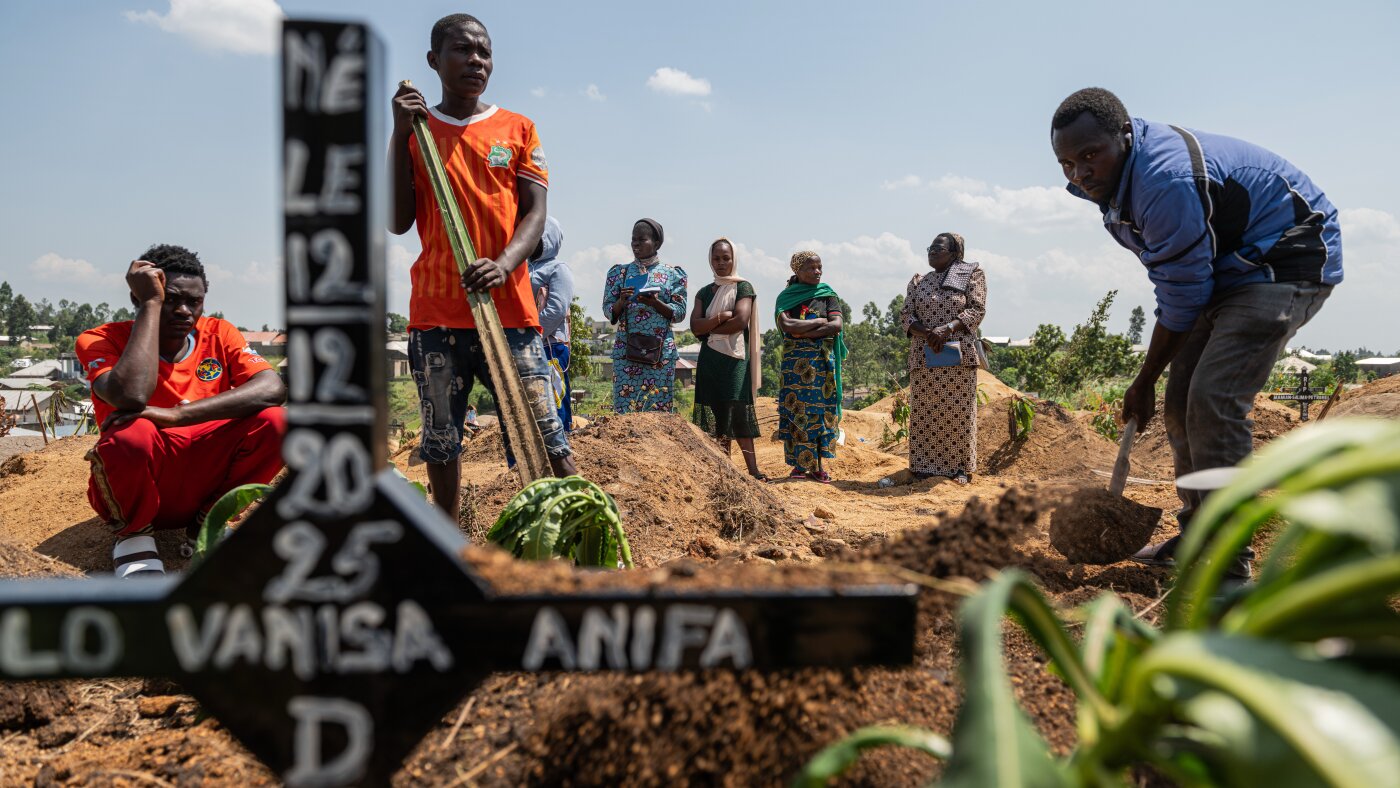
The Ebola outbreak in the eastern Democratic Republic of Congo has reached a significant milestone, with official figures indicating more than 1,000 deaths among 2,536 confirmed cases as of Thursday. The epidemic, which was declared May 15, continues to spread without apparent signs of deceleration, prompting high-level government attention and international engagement.
Conditions on the ground are described as dire, with healthcare infrastructure overwhelmed and response capacity struggling to keep pace with the outbreak’s expansion. The epidemic is spreading at unprecedented speed in Congo, reaching 2,000 cases in just two months compared to the 10-month timeline during the 2018-2019 outbreak, according to World Health Organization data. Multiple factors are contributing to the rapid transmission, including inadequate contact tracing systems, geographic expansion into new provinces, and the region’s unique characteristics that facilitate disease spread.
The outbreak’s epicenter in Ituri province faces compounding challenges, including over three decades of armed conflict and displacement camps housing more than 900,000 people. Artisanal gold mining operations in the region employ highly mobile informal workers who pose additional transmission risks. Recent weeks have seen the disease spread to Tshopo and Haut-Uele provinces, with confirmed cases in Kisangani, a major trading hub with over one million residents and connections to the national capital.
Resource constraints are severely hampering response efforts. The joint World Health Organization and Africa Centers for Disease Control plan requires $518 million, but faces a shortfall exceeding $400 million. Health workers have protested inadequate compensation and poor working conditions, with some briefly striking in Ituri. Treatment centers are operating at full capacity, forcing patients to remain at home while awaiting available beds, which increases transmission risks.
Congolese Prime Minister Judith Suminwa planned to visit outbreak hotspots Thursday accompanied by United States and United Nations officials. Aid organizations and health officials have warned that without increased funding and resources, controlling the situation will be unlikely.
Article Attribution | Read More at Article Source
Article summary produced by Claude AI