

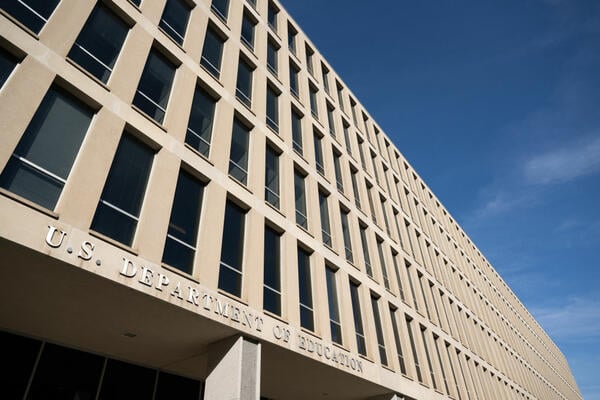
The U.S. Department of Education released a final rule Thursday ending enforcement of civil rights provisions that previously protected students against school and university policies with disparate impacts on minority groups. The department stated that under the new policy, only intentional discrimination will be found to violate Title VI of the Civil Rights Act of 1964. Assistant Secretary Kimberly Richey characterized the change as ensuring fair enforcement of the law as Congress intended.
The shift aligns with a broader trend across federal agencies following an April 2025 executive order by President Donald Trump directing elimination of disparate impact analysis. The Department of Justice issued an opinion declaring the Equal Employment Opportunity Commission’s disparate-impact guidelines unconstitutional in June, and the Department of Transportation similarly revised its rules that same month. The Education Department’s action represents what some observers describe as a significant departure from decades of civil rights enforcement.
Civil rights advocates and legal experts strongly opposed the policy change. Catherine Lhamon, who led the Office for Civil Rights during previous administrations, stated the rule effectively removes an investigative tool used to examine whether policies create disparate effects and whether institutions have justified reasons for those effects. A coalition of over 60 civil rights organizations, including EdTrust and the NAACP Legal Defense Fund, warned the change leaves students of color without federal protection from policies causing disproportionate harm. Legal experts noted that disparate impact has historically challenged various barriers in higher education, including legacy admissions policies and standardized testing requirements.
The department enacted the rule without prior public notice or the typical comment period. Officials claimed the Administrative Procedure Act exemption for agency management and federal benefits applied, though legal analysts questioned whether the Department of Education qualifies for this exemption under the General Education Provisions Act. Amanda Fuchs Miller, a higher education policy expert, stated the department did not address the applicable legal requirements and suggested the rule would likely face legal challenges. Both legal experts and civil rights advocates called for public comment opportunities and potential reversal of the policy.
Article Attribution | Read More at Article Source
Article summary produced by Claude AI