

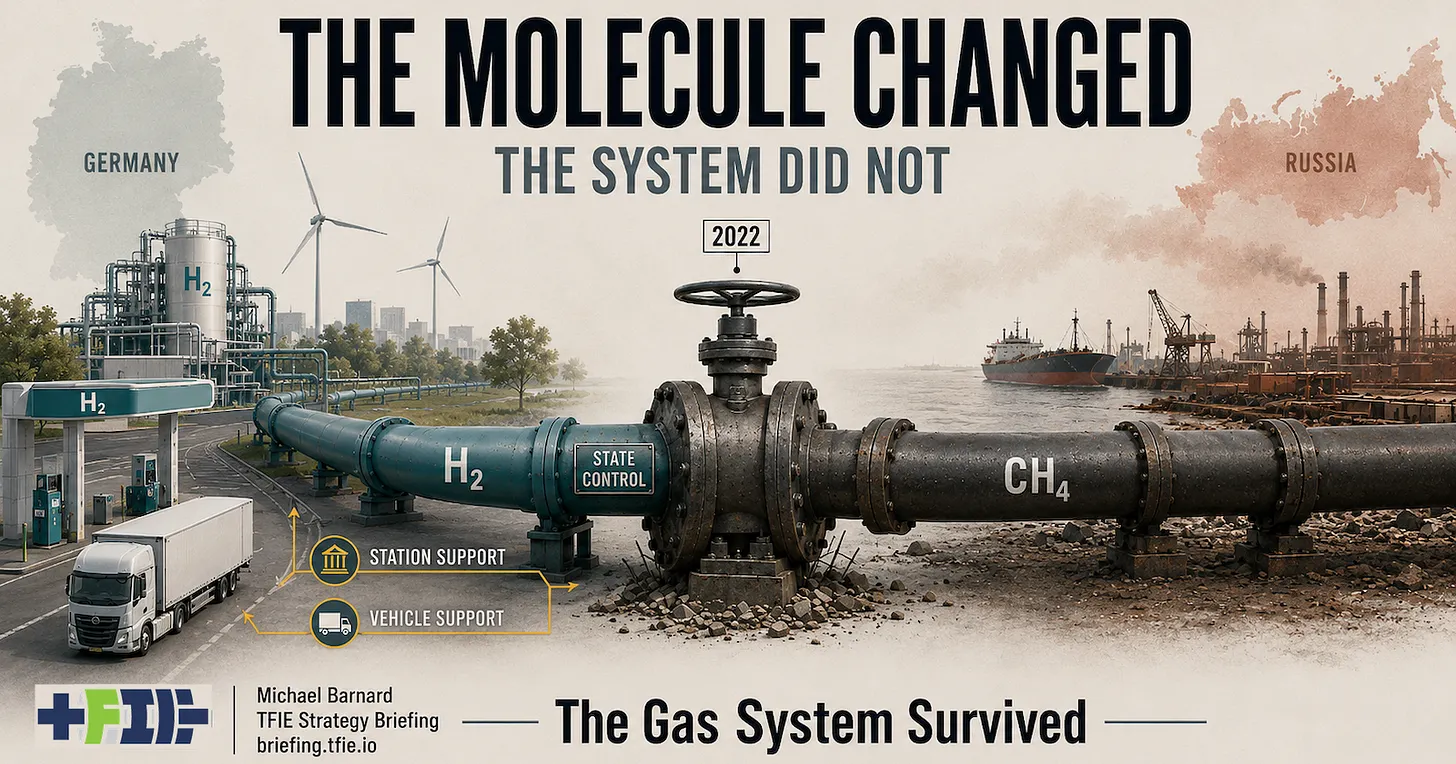
Germany has launched a hydrogen freight program that attracted substantial interest, with over 500 applications seeking support for vehicles, fleets, and refueling stations. However, examination of the subsidy structure reveals potential concerns about whether the interest reflects genuine commercial viability. The program offers up to 50% coverage of refueling station investment costs and up to 80% of the additional expense for hydrogen trucks compared to conventional vehicles.
This initiative represents part of a broader effort to establish a hydrogen economy following the collapse of Russian natural gas supplies to Germany. The trajectory began with the state takeover of Gazprom Germania during the 2022 energy crisis, which was renamed Securing Energy for Europe. The company was subsequently expanded through acquisition of pipeline operators GASCADE and NEL in 2024, with approximately 400 kilometers of natural gas pipelines converted for hydrogen transport, including portions of the former Nord Stream infrastructure corridor.
Observers raise questions about the sequencing and scale of Germany’s hydrogen infrastructure development. Historically, infrastructure projects typically follow established supply and demand patterns. Germany’s approach involved creating infrastructure capacity first, then relying on subsidies to generate corresponding supply and demand. This inverted process creates potential fiscal pressures, as maintaining underutilized infrastructure may require ongoing policy support.
The transport sector presents particular challenges for hydrogen viability. Germany’s hydrogen refueling network has faced utilization difficulties globally shared by other jurisdictions, where stations dispensing modest fuel volumes struggle to recover fixed operational costs through revenue alone. Meanwhile, battery-electric truck technology has advanced considerably, with French and German economic advisers in 2025 recommending prioritization of battery-based heavy transport infrastructure. Germany allocated €1 billion over four years for heavy-truck charging systems, though hydrogen continues receiving proportionally higher per-vehicle purchase subsidies.
Analysts suggest evaluating Germany’s hydrogen strategy against concrete performance metrics including commercially produced low-carbon hydrogen volumes, contracted demand levels, pipeline throughput rates, and post-subsidy purchase patterns rather than application counts or infrastructure conversion kilometers alone.
Article Attribution | Read More at Article Source
Article summary produced by Claude AI