

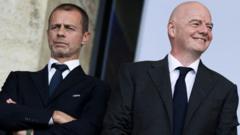
UEFA issued a stark statement on July 30 rejecting FIFA President Gianni Infantino’s proposal to sell a 20% stake in a subsidiary company designated to operate FIFA competitions, including the World Cup. The plan involves private investors, including Joshua Kushner, funding a portion of the entity that would manage the world governing body’s most prestigious tournaments. UEFA’s position represents the strongest continental confederation challenge to Infantino’s authority, threatening member nations’ participation in FIFA events.
The timing of UEFA’s stance creates immediate complications for upcoming tournaments. The U20 Women’s World Cup begins September 5 in Poland, with the September 19 deadline for countries to accept FIFA’s deal potentially creating disruptions mid-tournament. The Women’s World Cup play-offs in October would follow, affecting nations including England, Scotland, Wales and Northern Ireland. Concacaf, representing North and Central American football, also rejected the proposals, with sources indicating members question Infantino’s capacity to lead the organization.
The backlash centers on perceived lack of consultation with confederation leaders and FIFA colleagues. Football Association leadership, including FA chair Debbie Brewitt and Scottish FA president Mike Mulraney, publicly opposed the plan. FIFA responded by attributing consultation disruptions to media misreporting and reaffirming its commitment to democratic processes. The organization maintains the initiative does not constitute selling football.
Infantino, elected FIFA president in 2016, faces uncertain political prospects despite expectations of unopposed re-election at his fourth-term vote scheduled for March. While most sitting FIFA presidents avoid electoral challenges historically, current discussions involve potential opposition candidates, though prominent figures have declined interest. The commercial implications are substantial; without European participation, FIFA’s projected revenues would face severe compression, undermining Infantino’s stated $40 billion product valuation.
Observers debate whether Infantino can survive the crisis. Some suggest his position requires backing down from the proposal, while others note FIFA’s unprecedented organizational structure could allow him to retain office if sufficient national association support remains. The standoff presents a fundamental test of FIFA governance structures and confederation power dynamics within international football administration.
Article Attribution | Read More at Article Source
Article summary produced by Claude AI