

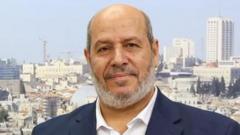
The Palestinian armed group Hamas has chosen Khalil al-Hayya to serve as its new leader, according to statements from the organization. He succeeds Yahya Sinwar, who was killed by Israeli military operations in Gaza in October 2024.
Hayya previously held the position of Hamas leader in Gaza while operating from exile and was widely characterized as representing the hardline wing of the movement that emerged during the conflict with Israel that began nearly three years ago. He maintained close ties with Sinwar and is expected to continue political directions established by previous leadership, including the late Ismail Haniyeh. In his role as chief negotiator, Hayya gained international visibility by directing Hamas’s participation in indirect ceasefire discussions, where he engaged with mediators based in Egypt and Qatar. He had recently assumed expanded responsibilities concerning the organization’s diplomatic and political direction.
The 65-year-old survived an Israeli air strike in September 2025 that targeted a gathering of Hamas leaders in Doha. That operation resulted in the deaths of five lower-ranking members, one of his sons, and a Qatari security official. Israeli authorities stated the operation targeted individuals involved in organizing the October 7, 2023 attack on southern Israel. Hayya has experienced significant personal losses, with two additional sons killed in earlier Israeli operations in Gaza and a fourth son killed in a May air strike.
Hayya’s election followed two rounds of voting among the 69-member electoral college. The first round produced no clear winner, with former political bureau chief Khaled Meshaal receiving slightly more votes but falling short of the required 36-vote threshold. The contest reflected fundamental disagreements within Hamas regarding its future direction. Meshaal’s supporters advocated for the organization to reassess its strategy and shift toward more pragmatic political engagement while maintaining core objectives. Hayya’s backers successfully argued that Gaza’s leadership, having sustained the heaviest costs from the conflict, should direct the movement forward while resisting pressure to make major concessions, particularly regarding disarmament.
Hamas continues navigating one of its most challenging periods. Since agreeing to a ceasefire agreement with Israel last October, the organization has maintained its weapons while demanding guarantees of a political pathway to Palestinian self-determination. The group has rejected proposals emphasizing immediate disarmament, citing insufficient security assurances and concerns about emerging rival armed factions.