

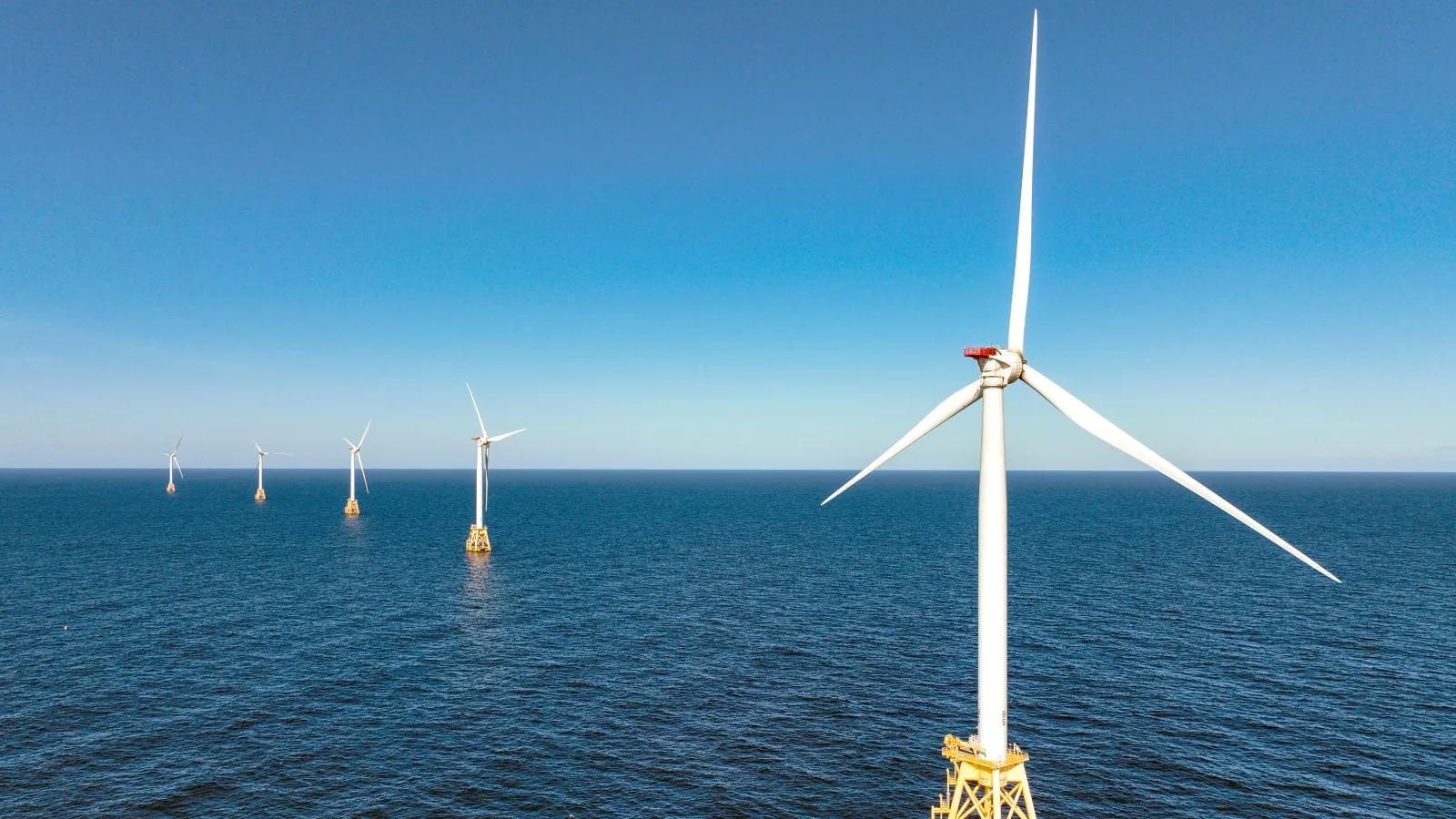
Two offshore wind projects near New England demonstrated their ability to support the electric grid during an intense heat wave in July, with operational turbines delivering consistent power as demand surged from increased air conditioning use. Data from the Grid Status analysis firm indicated that oil-fired generation, which typically activates during peak demand periods, fell significantly compared to similar conditions during a heat event in June 2025, before much of the current offshore wind capacity became operational. On July 2, 2026, the region’s hottest day, oil provided nearly 10 percent of total peak-demand power generation, down from nearly 15 percent during the June 2025 event—representing a decline of more than one gigawatt in oil-fueled generation between the two periods.
Multiple factors contributed to the reduced reliance on oil plants during the recent heat wave. The New England Clean Energy Connect power line, which began delivering hydroelectric power from Canada to Maine in January, supplemented grid capacity during peak demand. Additionally, widespread rooftop solar installations eased overall electricity consumption patterns. Grid Status analyst Tim Ennis noted that even accounting for slightly lower total demand during the July peak compared to the prior year’s event, the availability of wind and hydropower generation prevented utilities from requiring as much oil-based power at times of greatest stress.
The Vineyard Wind project off Massachusetts, with a capacity of 806 megawatts, completed construction in March and had 49 of its 62 turbines operational by early May. The Revolution Wind facility near Rhode Island, rated at 704 megawatts, began delivering electricity to the grid in March and is expected to achieve full commercial operations by the second half of 2026. Over the four-day heat wave from July 1 to 4, New England operators produced 42.2 gigawatt-hours of oil-fired power, representing a 37 percent reduction from the three-day period in June 2025.
While offshore wind is traditionally viewed as a winter resource due to stronger and steadier ocean winds during colder months, recent performance confirms the technology supports grid stability during extreme heat events as well. The Independent System Operator New England has emphasized the importance of offshore wind capacity for managing both cold and heat-related demand spikes. Once all five large-scale U.S. offshore wind projects under development reach full operation, analysts estimate they will contribute nearly 6 gigawatts of clean generation capacity to support the East Coast grid during periods of extreme temperature variation.
Article Attribution | Read More at Article Source
Article summary produced by Claude AI