

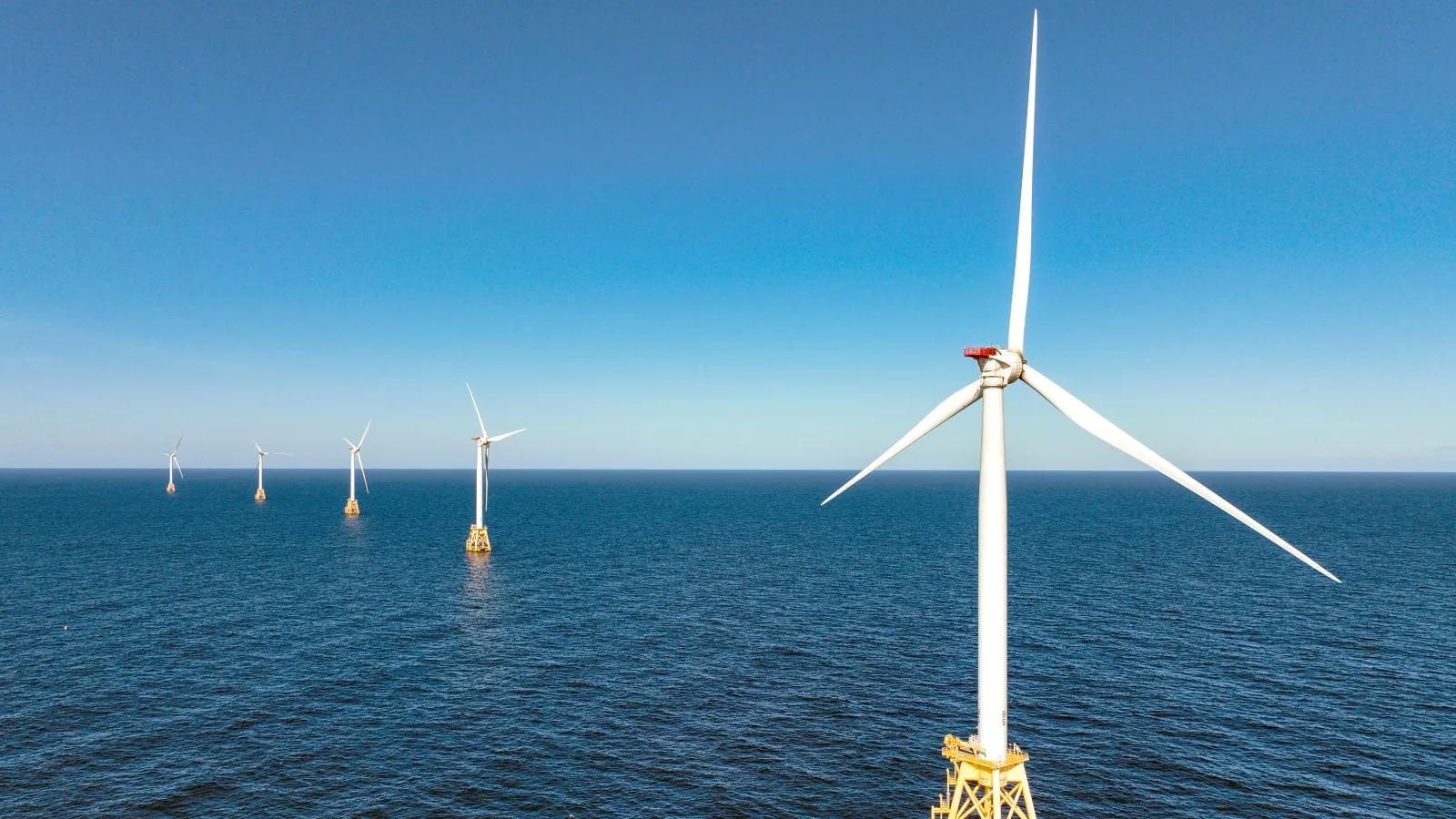
Two offshore wind projects near New England demonstrated their capacity to support the regional electrical grid during a heat wave earlier this month, according to data from Grid Status. As temperatures reached dangerous levels and residents increased air conditioning use, the facilities consistently provided hundreds of megawatts of power, reducing the need for utilities to activate oil-burning peaker plants that operate only during peak demand periods.
Comparisons between current conditions and a similar heat event in June 2025, before most offshore wind capacity was available, showed measurable improvements. On July 2, oil accounted for nearly 10 percent of the region’s peak power supply, compared to nearly 15 percent during the highest point in June 2025—representing a reduction of more than one gigawatt in oil-based generation. While overall demand was slightly lower during the more recent event, Grid Status attributed the significant decline in oil reliance primarily to the new offshore wind generation coming online.
Other clean energy sources also contributed to reducing oil consumption. Hydropower imported via the New England Clean Energy Connect transmission line, which began operations from Canada to Maine in January, and an expansion of rooftop solar installations both eased electricity demand during the heat event. According to Grid Status analyst Tim Ennis, the combination of wind and hydropower capacity meant utilities did not need to activate oil plants as extensively during peak afternoon demand periods.
The Vineyard Wind project off Massachusetts, with a capacity of 806 megawatts, completed construction in March with 49 of its 62 turbines operational by early May. The Revolution Wind project near Rhode Island, rated at 704 megawatts, began supplying power to the grid in March and is scheduled to reach full commercial operations by the second half of 2026. The South Fork Wind facility off New York’s coast also operated at near-full capacity during the heat wave. Overall, during the four-day peak of the heat event, oil-fired generation totaled 42.2 gigawatt-hours, down 37 percent from comparable periods in June 2025.
When all five planned East Coast offshore wind projects reach full operation, they are expected to add nearly 6 gigawatts of clean generation capacity, further supporting grid reliability during extreme weather events. The administration has pursued various strategies to limit offshore wind development in recent years, though courts have periodically reversed some regulatory actions. Industry observers note that the initial projects now operating demonstrate the sector’s capacity to meet growing regional electricity demand during both winter cold snaps and summer heat waves.
Article Attribution | Read More at Article Source
Article summary produced by Claude AI