

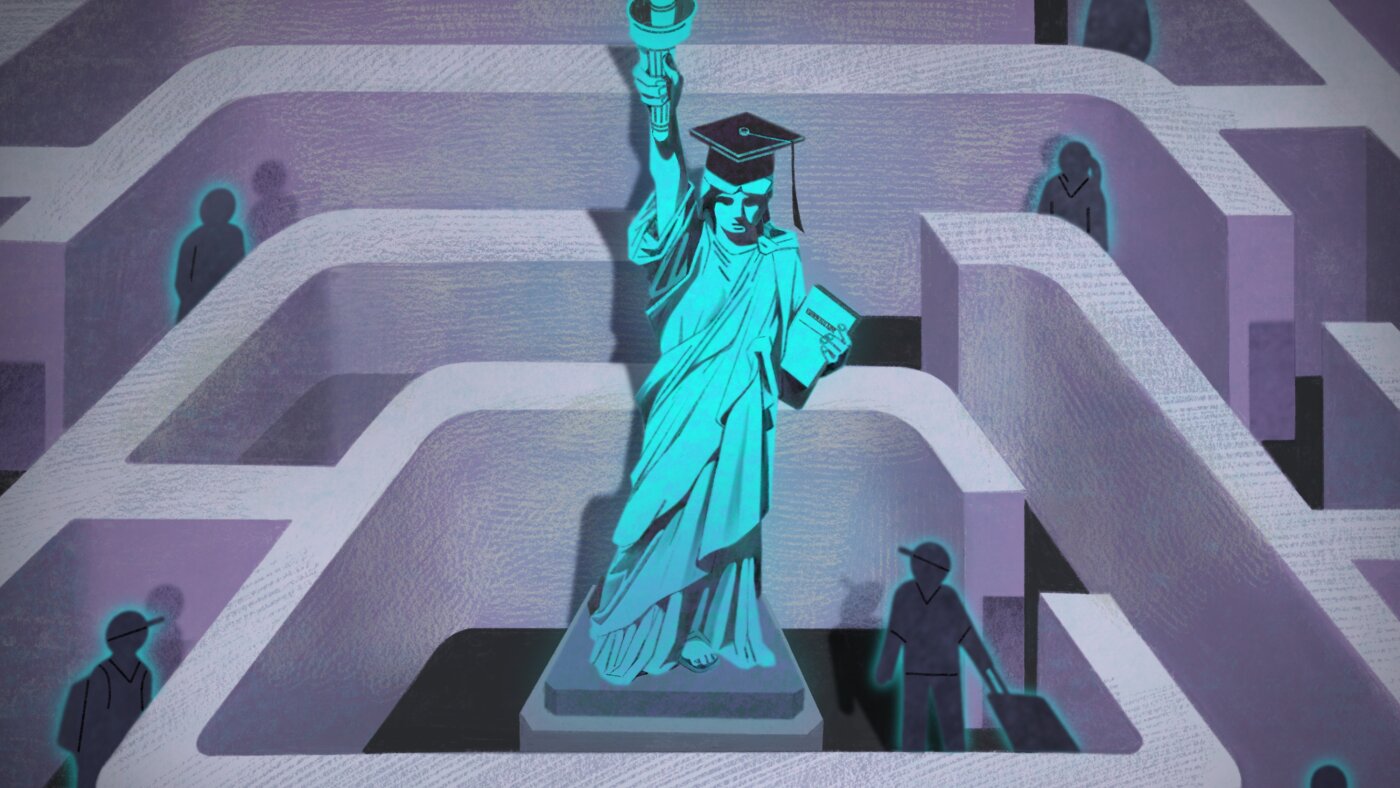
The Department of Homeland Security has announced new visa regulations that impose fixed time limits on student visas and restrict how foreign students can transfer between schools or change their academic focus. The changes, which take effect in mid-September, represent part of a broader immigration reduction effort by the Trump administration.
Under the updated rules, most international students will receive visas valid for up to four years, with extensions requiring additional applications and fees. The regulations also prevent students from changing majors or transferring institutions during their first year and reduce the post-graduation grace period for leaving the country from 60 days to 30 days. Previously, students on F and J visas could remain in the country indefinitely as long as they maintained academic progress and enrollment.
Universities and higher education organizations have expressed significant concerns about the policy’s implementation. International students represent a substantial portion of many college campuses and contribute considerable financial resources since they do not qualify for federal aid and typically pay full tuition. Education leaders argue that the restrictions undermine American universities’ competitive advantage and ability to attract top global talent. Specific concerns focus on graduate and doctoral programs that typically exceed four years to complete, including medical and research-intensive fields.
Homeland Security Secretary Markwayne Mullin stated the rule targets so-called “forever students” who intentionally extend their studies. However, government data from 2024 showed that only 2.45% of the 1.4 million international student visa holders had suspected in-country overstay violations. During the rulemaking process, universities submitted over 20,000 comments opposing the changes, citing disruptions to doctoral programs and workforce development.
The policy follows recent declines in international student enrollment at American graduate programs, which officials attribute to earlier Trump administration travel restrictions, visa processing disruptions, and research funding cuts. Higher education institutions are now adjusting their international student offices and planning communications to address uncertainty among current and prospective foreign students about how the new requirements will affect their studies and immigration status.
Article Attribution | Read More at Article Source
Article summary produced by Claude AI