

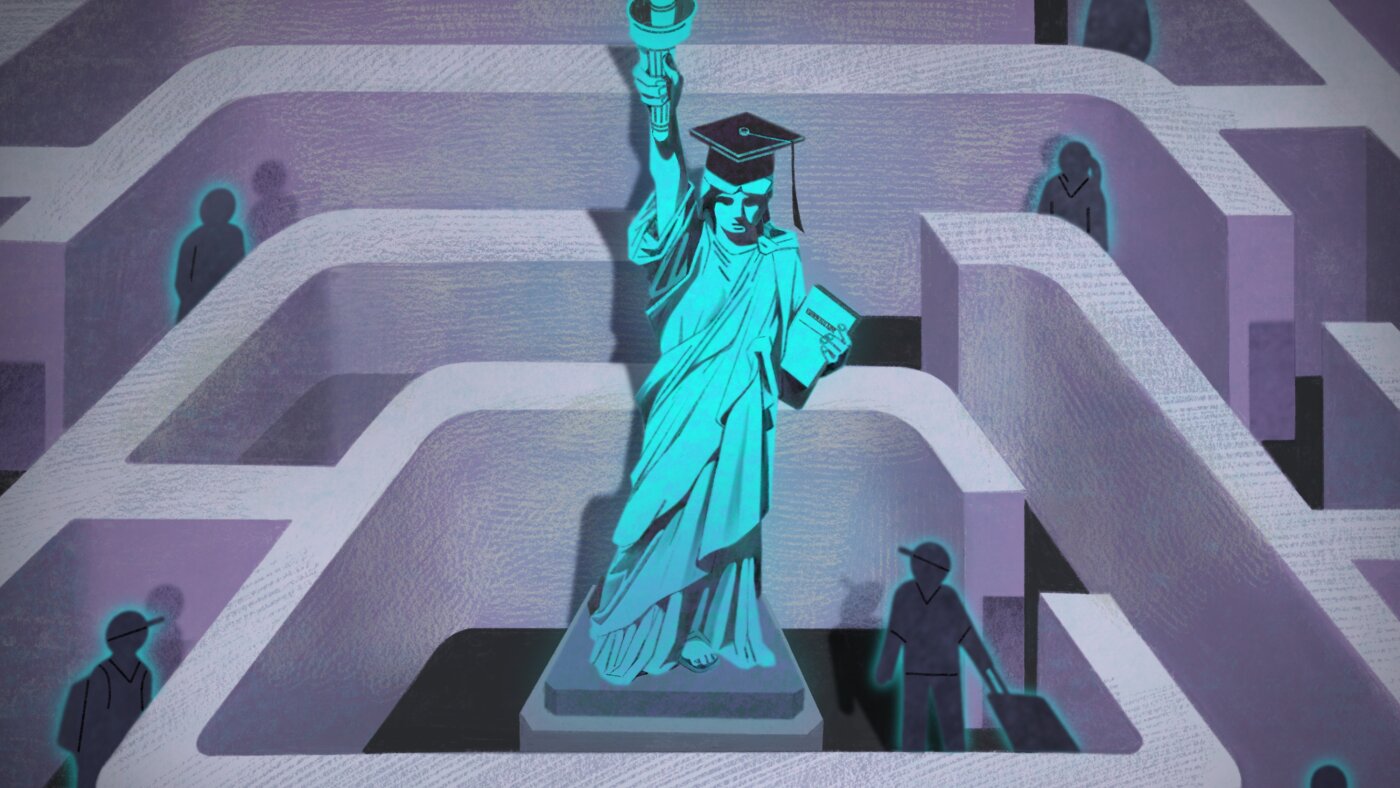
The Trump administration announced new rules that significantly restrict visas for international students studying in the United States. The Department of Homeland Security implemented changes to F and J visas, citing concerns about foreign students who intentionally extend their time in the country. Under the new regulations, most international students will be limited to a fixed four-year period of stay. Students requiring additional time must apply for extensions and pay associated fees. The policy also prohibits changing majors or transferring schools during the first year of enrollment and reduces the post-graduation grace period from 60 days to 30 days.
Higher education institutions have expressed significant concern about the impact on their operations and academic programs. Many colleges and universities submitted comments during the public comment period, warning that the restrictions would disrupt doctoral programs and other extended degree pursuits. Several universities noted that programs like medical degrees and Ph.D.s typically require longer than four years to complete. Vanderbilt University’s provost highlighted that the average Ph.D. completion time at their institution exceeds 5.75 years, meaning nearly all 528 international doctoral students could face interrupted education. Oklahoma State University and other institutions also flagged specific programs that would be affected, including veterinary medicine.
International students contribute substantially to American universities financially and academically. They often pay full tuition without access to federal aid and comprise up to one-fifth of some campuses’ student bodies. Education leaders argue that international students strengthen research programs, innovation, and campus diversity. The executive director of NAFSA: Association of International Educators characterized the policy as misguided, warning that it undermines American higher education’s global competitiveness. The Department of Homeland Security cited a 2.45% suspected in-country overstay rate among student visa holders in 2024 as justification for the changes.
The new rule takes effect mid-September. For current visa holders, their visa lengths will automatically update to four years from the rule’s start date. Universities are now working to understand implementation details and prepare their communities. Carnegie Mellon University plans to hold informational sessions for students and scholars seeking clarification about how the changes will affect their academic pursuits and status in the United States.
Article Attribution | Read More at Article Source
Article summary produced by Claude AI