

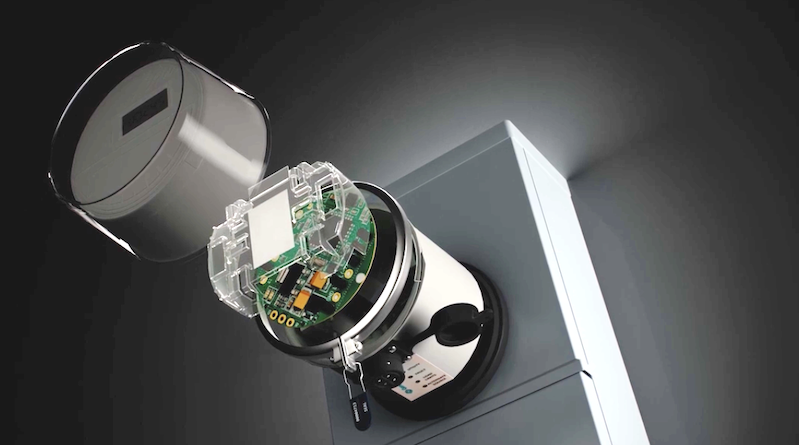
Ford Motor Company has announced a partnership with Global Power Products to introduce GenerLink, a compact power transfer system designed to simplify vehicle-to-home technology for electric vehicle owners. The system features a new Ford Vehicle Connector and fits directly over a home’s electricity meter, eliminating the need for multiple extension cords traditionally required to connect EV batteries to household appliances and systems.
The GenerLink system allows electricity from an EV’s 240-volt outlet to flow directly into a home’s main electrical panel, powering essential systems including lighting, Wi-Fi routers, furnaces, outlets, and security systems. Ford estimates that its F-150 Lightning trucks equipped with the system can provide backup power to an average home for two to three days, while the company’s PowerBoost Hybrid models can supply power for up to five days, depending on usage patterns and battery capacity.
The equipment carries a cost of approximately $1,100, with installation expenses typically ranging from $250 to $450 for direct meter installation. In areas where utilities have not yet approved direct meter installation, the system can be positioned adjacent to the meter, though installation costs rise to between $1,000 and $1,500. Ford indicates that hundreds of utilities have already pre-approved the GenerLink system for direct installation following field trials across multiple states.
The development reflects broader industry interest in vehicle-to-home and vehicle-to-grid technologies as backup power sources become increasingly relevant given climate-related weather events. Competitors including Tesla and General Motors have also introduced similar V2H systems. The timing of Ford’s announcement comes as the company transitions its all-electric F-150 Lightning toward a plug-in hybrid extended-range model, though the company continues development of a separate mid-sized battery electric pickup truck intended for production in 2027.
Meanwhile, the EV battery materials sector shows signs of momentum, with startup Sila securing $300 million in funding to expand U.S. production of its silicon-carbon anode technology, which the company claims delivers 20-40% higher energy density compared to traditional graphite formulations.
Article Attribution | Read More at Article Source
Article summary produced by Claude AI