

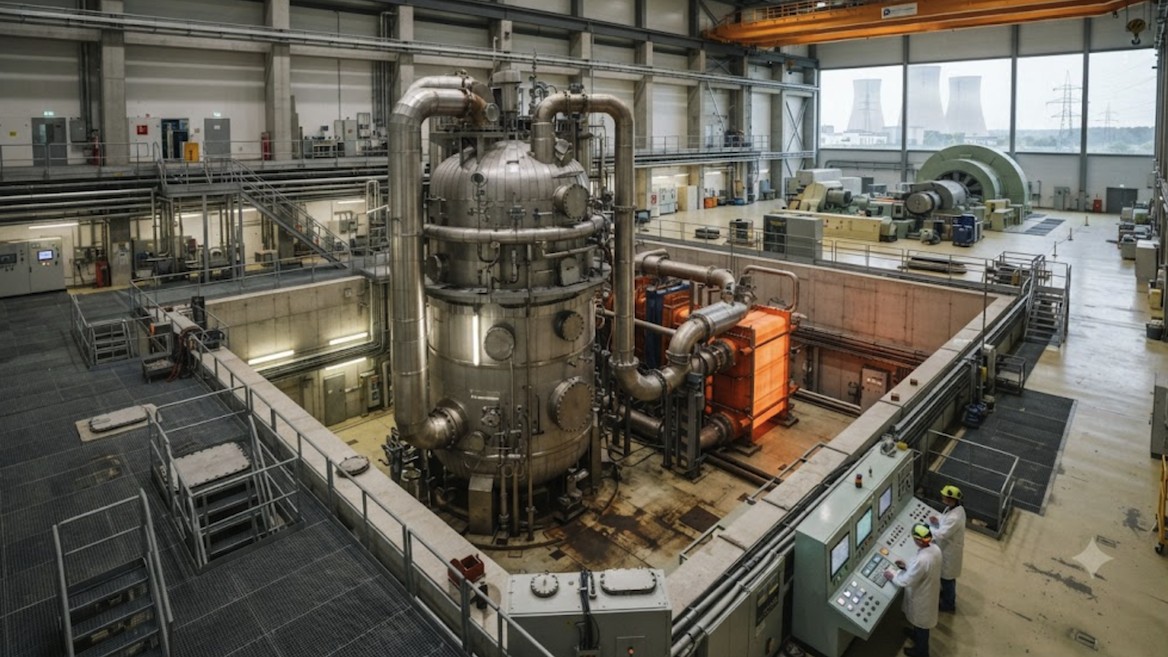
The Department of Energy has granted approval for a Nuclear Safety Design Agreement related to a molten salt reactor project at Abilene Christian University in Texas, representing the first such regulatory clearance for this type of advanced nuclear technology in the United States.
Molten salt reactors represent an emerging class of nuclear power systems that proponents say could address several limitations of conventional reactor designs. According to the Department of Energy, these reactors are engineered to consume less fuel and generate shorter-lived radioactive waste compared to traditional reactor types. The design allows for online fuel processing, continuous waste removal, and fresh fuel addition without the extended shutdown periods required by conventional nuclear plants. Molten salt functions as both the fuel medium and the cooling agent in these systems, potentially improving both safety and economic performance.
The technology offers additional advantages over water-cooled reactors, particularly in regions experiencing water scarcity or extreme heat events. Traditional nuclear facilities depend on water supplies for cooling and face operational challenges during droughts and heat waves, as demonstrated recently when France temporarily took multiple reactors offline due to unseasonably high river temperatures. Molten salt reactors eliminate this vulnerability through their integrated cooling approach.
Development efforts are underway at multiple institutions, including Abilene Christian University and Oak Ridge National Laboratory in Tennessee. Oak Ridge has made progress in modeling molten salt behavior to support practical reactor design, while Abilene’s recent regulatory approval establishes critical safety parameters needed for federal authorization of facility construction and testing.
The approval occurs amid broader government initiatives to advance nuclear energy technology. However, some analysts question whether prioritizing experimental reactors may detract from near-term expansion goals. China has reportedly constructed an operational thorium-based molten salt reactor and continues building the majority of nuclear reactors currently under construction globally, potentially positioning it to become the world’s largest nuclear power producer within the next decade.
Article Attribution | Read More at Article Source
Article summary produced by Claude AI