

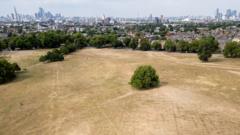
The Environment Agency announced that drought conditions have been established across extensive portions of England, including regions in the east, center, and south. The declaration encompasses areas such as East Anglia, London and Hertfordshire, the Thames Valley, Hampshire, Devon and Cornwall, the West Midlands, and Wessex. This marks the third drought event to occur within the past five years.
The declaration reflects mounting stress on the nation’s water resources, with low river flows, hastened crop harvests, and heightened wildfire danger already evident. More than 20 million people are currently subject to hosepipe restrictions. North Wales and the Upper Severn river basin entered drought conditions earlier, while parts of eastern Scotland have been classified in the most severe water scarcity category. Northern Ireland is not presently in drought.
The current drought has developed rapidly, characterized as a “flash drought” by authorities. Although January and February brought substantial precipitation that replenished reservoirs and groundwater, late spring and summer conditions have been exceptionally hot and arid. July rainfall in England has reached only 7 percent of average levels, with southern England experiencing merely 1 percent. Certain Devon and Hampshire locations have recorded more than a month without precipitation. The shift between wet and dry periods is sometimes referred to as “climate whiplash.” Temperatures have risen significantly, with June’s record peak revised to 38.0 degrees Celsius in Norfolk, surpassing the previous UK June record.
Experts attribute the intensity and frequency of such events to climate change, which elevates summer temperatures and accelerates soil moisture depletion. Additional contributing factors include aging water infrastructure, insufficient investment in water systems, and rising water demand. The Environment Agency projects that public water supplies could face a shortage of 5 billion liters daily by mid-century without substantial intervention. Agricultural operations have been notably impacted, with farmers facing increased costs and production challenges. Wildlife has also suffered, as Atlantic salmon cannot navigate upstream in rivers with diminished flows. Heat health alerts remain in effect across parts of the country, and over 200 wildfire incidents have been documented in England and Wales during the preceding two weeks.
Article Attribution | Read More at Article Source
Article summary produced by Claude AI