

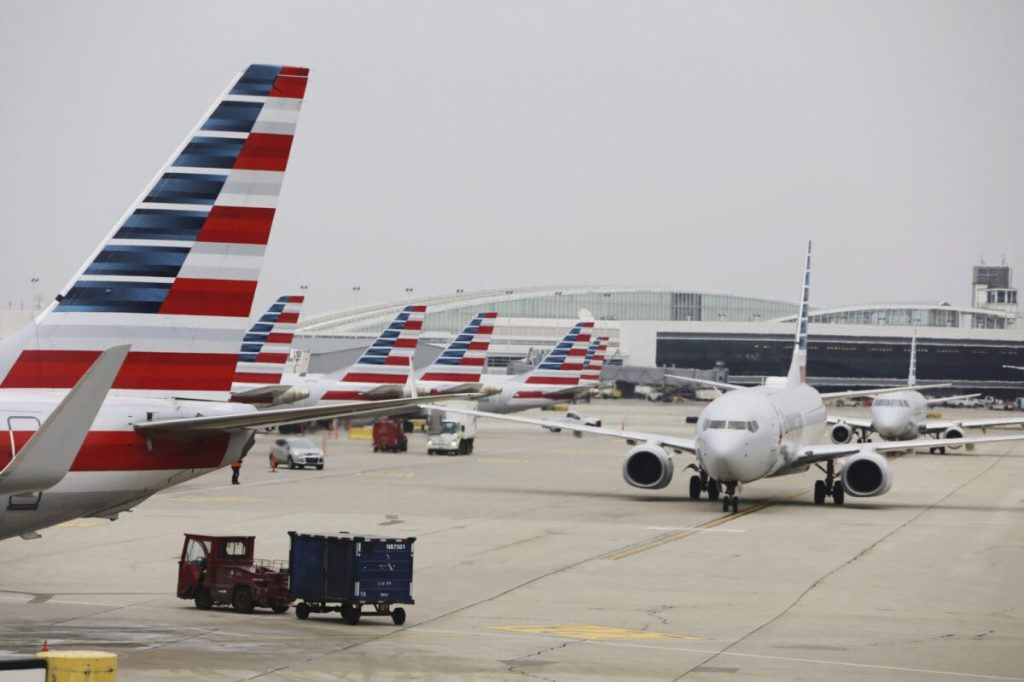
The airline industry is responding to volatile fuel costs through divergent strategic approaches, with most carriers implementing capacity reductions to strengthen pricing power and offset elevated expenses. American Airlines, however, is pursuing a distinct strategy by maintaining higher capacity levels relative to its major competitors.
In the second quarter, American Airlines increased capacity by 5.4% compared to the same period in the previous year. Looking ahead to the third quarter, the carrier projects capacity growth between 3% and 5%. This contrasts sharply with the approaches taken by Delta Air Lines and United Airlines, both of which have announced more substantial capacity cuts in response to current market conditions.
Airline executives typically utilize capacity reductions as a mechanism to enhance pricing power, improve yield metrics, and increase load factors—all of which help offset rising fuel expenses. American Airlines leadership has indicated the carrier is adopting a more conservative approach to capacity adjustments due to concerns about fuel price unpredictability, suggesting the airline believes it can manage costs differently than its competitors.
Despite beating Wall Street profit expectations in the second quarter with $71 million in net income, American Airlines’ financial performance lagged behind that of its major rivals. Delta reported profits of $1.6 billion for the same period, while United reported $805 million, substantially outpacing American’s results. These disparities suggest that the capacity strategies employed by different carriers are producing varying financial outcomes as the industry navigates elevated fuel costs and demand pressures.
The divergence in approach among major carriers reflects broader industry uncertainty about optimal strategies for managing current economic headwinds and fuel market volatility.
Article Attribution | Read More at Article Source
Article summary produced by Claude AI