

The US natural gas industry has added minimal new power generation capacity since January 2025, when a declared energy emergency prompted policy shifts. Industry analysts attribute this slowdown partly to a prolonged backlog in gas turbine manufacturing. Meanwhile, alternative energy sources including wind, solar, and energy storage systems continue to expand at faster rates and lower costs, according to industry observers.
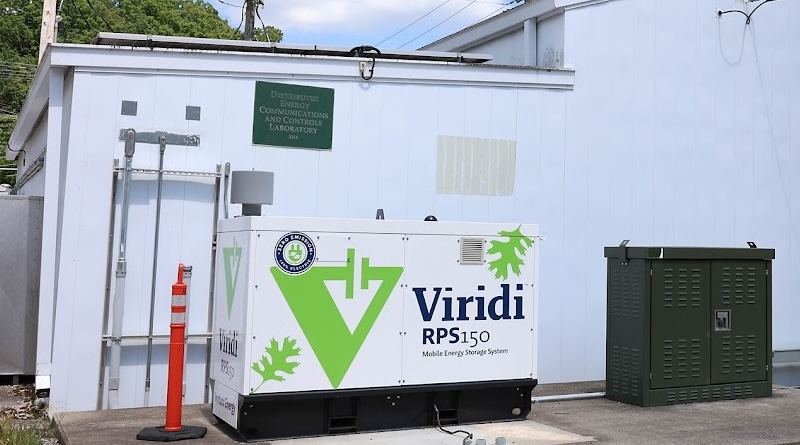
Grid modernization efforts are accelerating to support increased renewable energy integration. The Department of Energy remains committed to developing new energy storage technologies that complement wind and solar generation. Battery startup Viridi has partnered with Oak Ridge National Laboratory’s Grid Research Innovation and Development Center to test a lithium-ion battery system designed to coordinate multiple batteries within a distributed energy resource network. Initial results from live trials have been positive, with detailed data analysis expected in coming months. The project also positions Viridi for further collaboration including participation in the Accelerating Resilient Infrastructure Initiative, a community-focused distributed energy program. Additionally, Viridi recently contracted with energy-as-a-service provider Budderfly to install battery systems at 100 commercial locations.
Demand-side efficiency improvements represent another grid modernization avenue. General Motors has deployed technology from UK startup IONATE at its Romulus, Michigan manufacturing facility. The system, called Hybrid Intelligent Transformer, provides real-time power monitoring and can support 33 percent more distributed energy resources while accommodating 25 percent additional power on existing grid infrastructure without requiring costly upgrades to physical infrastructure.
Virtual power plant initiatives are expanding, enabling networked participation from residential and commercial customers. A collaboration between five major firms—Eversource, National Grid, EnergyHub, Sunrun, and Mobility House—has launched a vehicle-to-grid program for electric vehicle owners in Massachusetts, where EV adoption has surpassed 150,000 units. The program allows customers to participate in grid balancing activities, with growing interest in vehicle-to-grid capabilities as awareness of financial incentives increases.
Article Attribution | Read More at Article Source
Article summary produced by Claude AI