

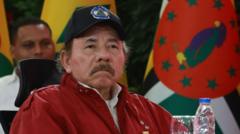
Nicaragua’s president, who has governed the country since 2007, has put forward a proposal to lengthen the presidential term by one year. The government-controlled legislature is anticipated to vote on approving this extension in September. The proposal forms part of a broader constitutional reform package that would also establish mechanisms to prevent opposition figures classified by the administration as “traitors” or “coup plotters” from participating in elections.
Ortega, now 80 years old, has overseen a significant expansion of executive authority during his tenure. His administration has detained political opponents, forced others into exile, and revoked citizenship from numerous adversaries. Throughout nearly two decades of rule, the presidential term structure has undergone multiple modifications. A 2014 legislative action eliminated constitutional restrictions on consecutive presidential terms, while a 2024 decision extended the standard presidential term from five to six years.
The National Assembly has also endorsed a contentious arrangement designating Ortega’s wife, Rosario Murillo, as “co-president.” This constitutional position would enable her to assume the presidency if Ortega is officially declared “permanently absent” due to health concerns. Recent reports have suggested the president may be experiencing declining physical health.
The most recent presidential election took place in November 2021, resulting in an overwhelming victory for Ortega. The electoral process was widely criticized for its lack of genuine competition. Key opposition figures who possessed realistic prospects of securing substantial voter support faced detention and were barred from candidacy, while many others were compelled to leave the country. The election permitted only a limited number of relatively obscure candidates to contest the presidency.
International observers have documented deteriorating conditions in the country. The United Nations’ top human rights official has indicated that government suppression has intensified, with judicial independence compromised and persecution of political activists escalating. Public dissent remains constrained following a 2018 security operation that resulted in more than 300 deaths during suppression of demonstrations. Exiled dissidents have become targets of additional government action, including citizenship revocation and confiscation of their property within Nicaragua.
Article Attribution | Read More at Article Source
Article summary produced by Claude AI