

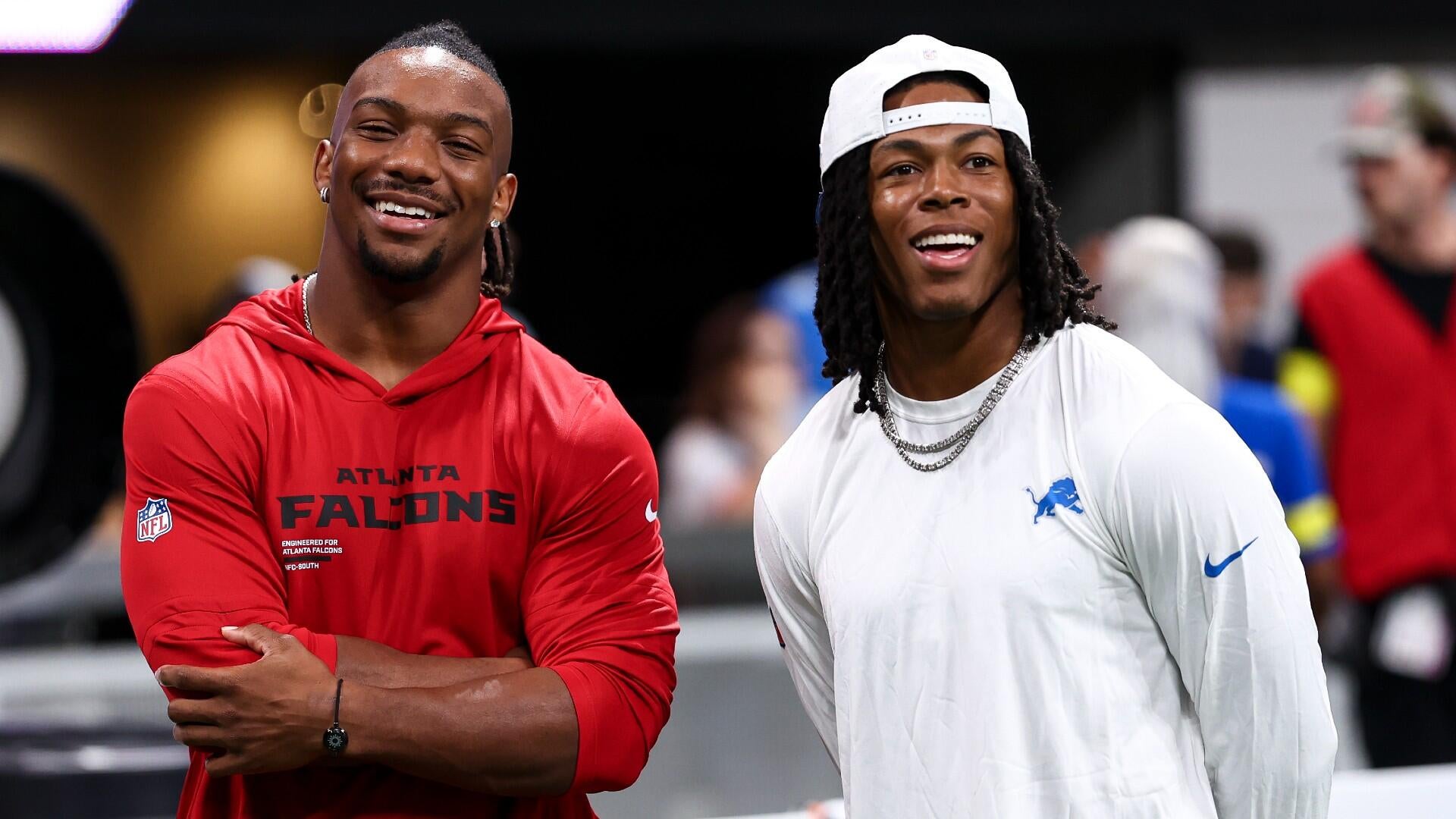
Bijan Robinson of the Falcons and Jahmyr Gibbs of the Lions have begun hold-ins during the opening of training camp, declining to participate in practice while awaiting new contract agreements. Both players remain present at camp but are withholding their participation pending the completion of extension negotiations.
Robinson and Gibbs each retain two years on their rookie contracts following their teams’ exercise of fifth-year options. Currently, they rank 27th and 31st respectively in total salary among NFL running backs. Robinson led the league last season with 2,298 all-purpose yards and is projected to become the highest-paid running back upon signing an extension. League observers anticipate Robinson and the Falcons will reach an agreement before the regular season commences. Gibbs, a Pro Bowler in each of his first three seasons, faces a less certain situation; Lions coach Dan Campbell offered measured comments about negotiations continuing to unfold organically.
The running back compensation landscape has shifted dramatically in recent years. Saquon Barkley became the first player at the position to average more than $20 million annually following his Eagles extension last offseason. Seven running backs currently earn at least $14 million per year on average. Both Robinson and Gibbs are positioned to join this elite earnings tier upon signing their next deals.
Spotrac estimates Robinson’s market value at a three-year, $56.52 million package averaging $18.87 million yearly, which would rank third among NFL running backs in annual salary. Given Robinson’s age and recent production, his actual extension may exceed these projections, potentially matching or surpassing Barkley’s $20 million annual threshold or even reaching $25 million annually. Gibbs’ projected market value stands higher at three-year, $60.45 million worth $20.61 million per year, placing him second in annual salary among the position. However, uncertainties surround the Lions’ assessment of his full-time capabilities following decreased production in the final weeks of last season, including declines in rushing yards, rushing touchdowns, and yards per carry compared to the prior year.
Article Attribution | Read More at Article Source
Article summary produced by Claude AI