

China has unveiled its renewable energy plan for the 2026-2030 period, establishing comprehensive targets and policy frameworks for expanding the nation’s clean-energy infrastructure. The plan, released in late July by the National Development and Reform Commission and National Energy Administration, sets ambitious goals while emphasizing improved reliability and grid integration alongside capacity expansion.
The centerpiece of the plan is a target to install 3,500 gigawatts of total renewable capacity by 2030, with wind and solar comprising 2,800GW of that total. This represents a significant increase from a previous 2030 target of 1,200GW for wind and solar, which China achieved six years ahead of schedule. As of June 2026, the country had installed approximately 2,000GW of wind and solar capacity, along with 454GW of hydropower. To meet the new targets, China would need to install roughly 160GW of wind and solar annually. The nation has demonstrated substantial progress toward these goals, having installed 277GW of new solar capacity in 2024 and 315GW in 2025. Additional renewable generation targets include 6,000 terawatt-hours of renewable electricity by 2030, with wind and solar contributing 4,000TWh, and overall renewable energy consumption reaching 1.8 billion tonnes of coal equivalent.
A significant policy shift involves establishing targets for “firm capacity” from wind and solar installations, marking a move beyond simple capacity expansion toward reliability and system support. Wind facilities are targeted to provide at least 11 percent firm capacity by 2030, while solar is set for 6 percent. The plan emphasizes developing “grid-friendly” renewable installations capable of supporting peak demand periods and providing voltage, frequency and inertia support. These new metrics represent a fundamental transition from pursuing installed capacity to ensuring renewable energy can serve as a dependable alternative to fossil fuels.
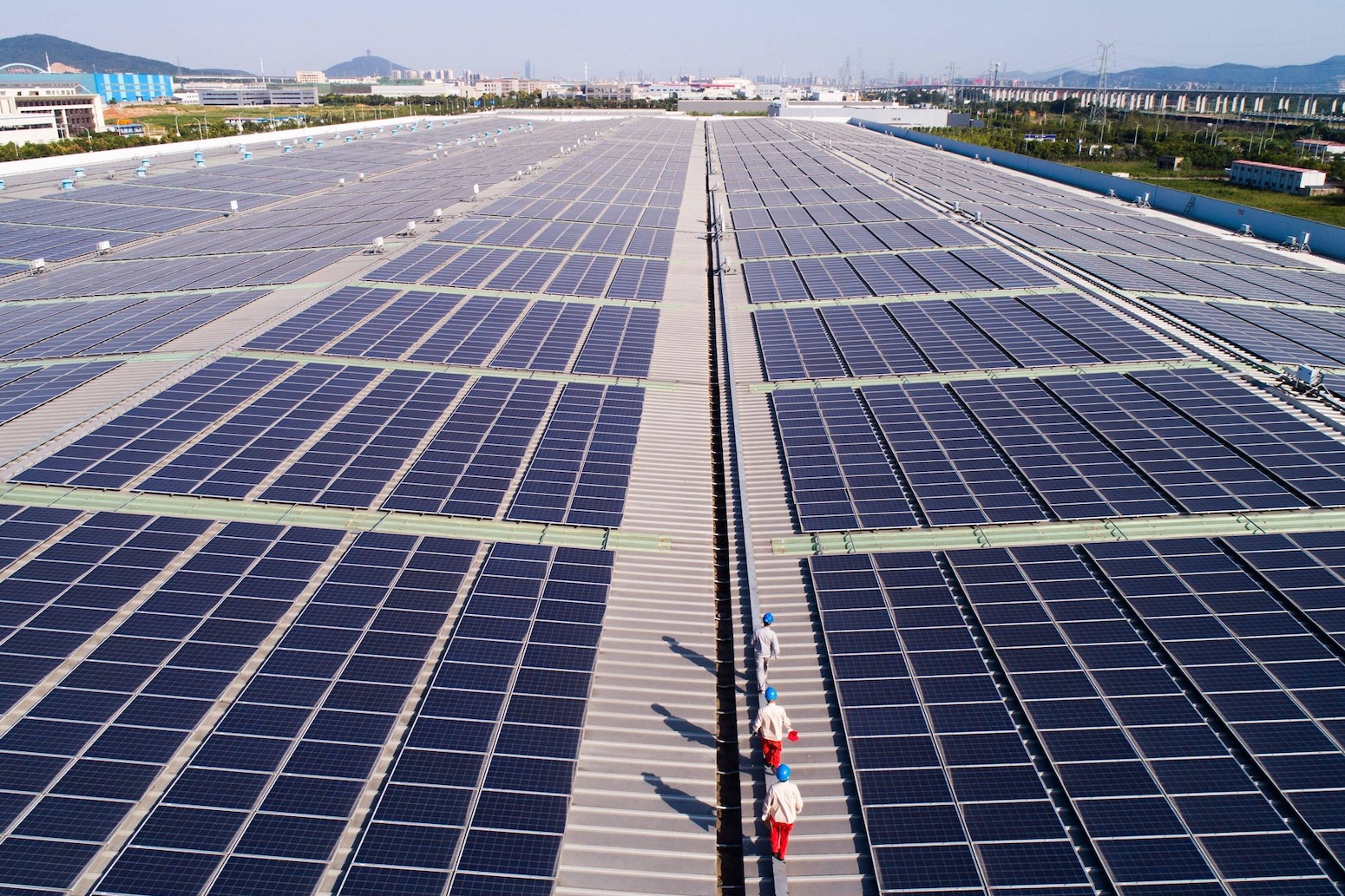
Beyond utility-scale generation, the plan allocates significant attention to distributed renewable energy, targeting 300GW of additions over the five-year period, averaging 60GW annually. Applications include rooftop solar installations, industrial park deployments and rural electrification. The plan also prioritizes non-power uses of renewable energy, seeking to increase renewable energy applications in industrial heat, hydrogen production and other sectors from 60 million tonnes of coal equivalent in 2025 to 150 million tonnes by 2030. Renewable hydrogen production is particularly emphasized, with targets to scale output to 2 million tonnes annually.
The plan signals China’s commitment to technological innovation and international cooperation on clean energy, pledging investment in advanced wind and solar technologies, artificial intelligence applications in energy systems and expanded global partnerships. Officials have characterized the transition as moving China from a “major energy nation” to an “energy powerhouse,” with implications for both domestic energy security and global clean-energy markets.
Article Attribution | Read More at Article Source
Article summary produced by Claude AI