

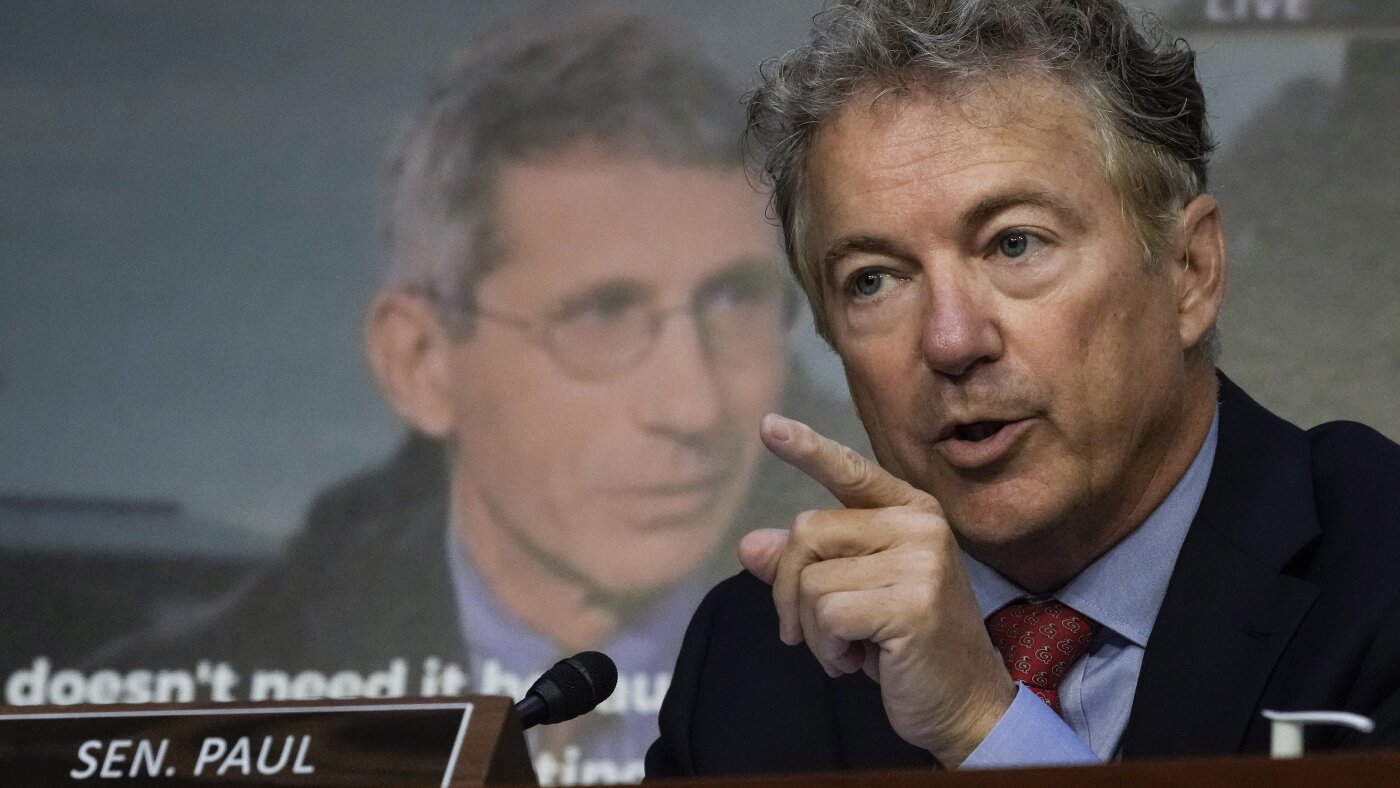
Sen. Rand Paul released newly obtained diary entries attributed to Dr. Anthony Fauci spanning from December 2019 through December 2022, the final years of Fauci’s tenure as director of the National Institute of Allergy and Infectious Diseases. The senator also released a 465-page collection of earlier documents from 2001 to 2015. The release preceded a Senate hearing on Wednesday where Fauci appeared before the Senate Homeland Security and Governmental Affairs Committee, which Paul chairs, to address questions about the origins of COVID-19.
Paul contended that the diary entries demonstrate a discrepancy between Fauci’s private writings and his public statements. Fauci’s legal representatives responded with a fact-check document and a letter characterizing Paul’s efforts as a years-long campaign to prosecute Fauci for what they described as imaginary crimes. The source of the diary documents remains unclear, though Health Secretary Robert F. Kennedy Jr. referenced retrieving materials from multiple servers.
The diary entries chronicle Fauci’s experience during the pandemic, including references to increasing security measures, celebrity encounters, and his growing international prominence. They also document his evolving thinking about the virus’s origins. In early 2020, Fauci noted disagreement among scientists about how the virus spread. Later entries reflected his assessment that the virus likely evolved naturally through animal-to-human transmission, while maintaining openness to alternative explanations. Scientists consulted by NPR characterized this reasoning process as typical of scientific inquiry during the early pandemic period when information was limited.
The debate over COVID-19’s origins centers on competing theories: the prevailing scientific consensus supports natural emergence from animals, while an alternative theory attributes the pandemic to a laboratory leak from the Wuhan Institute of Virology. A Republican-led subcommittee concluded in December 2024 that a lab leak was most likely, contradicting many virologists and earlier investigations by the World Health Organization and U.S. intelligence agencies that either supported natural origins or remained inconclusive. Experts note that early consideration of multiple origin theories represented standard scientific practice rather than evidence of misconduct.
Article Attribution | Read More at Article Source
Article summary produced by Claude AI