

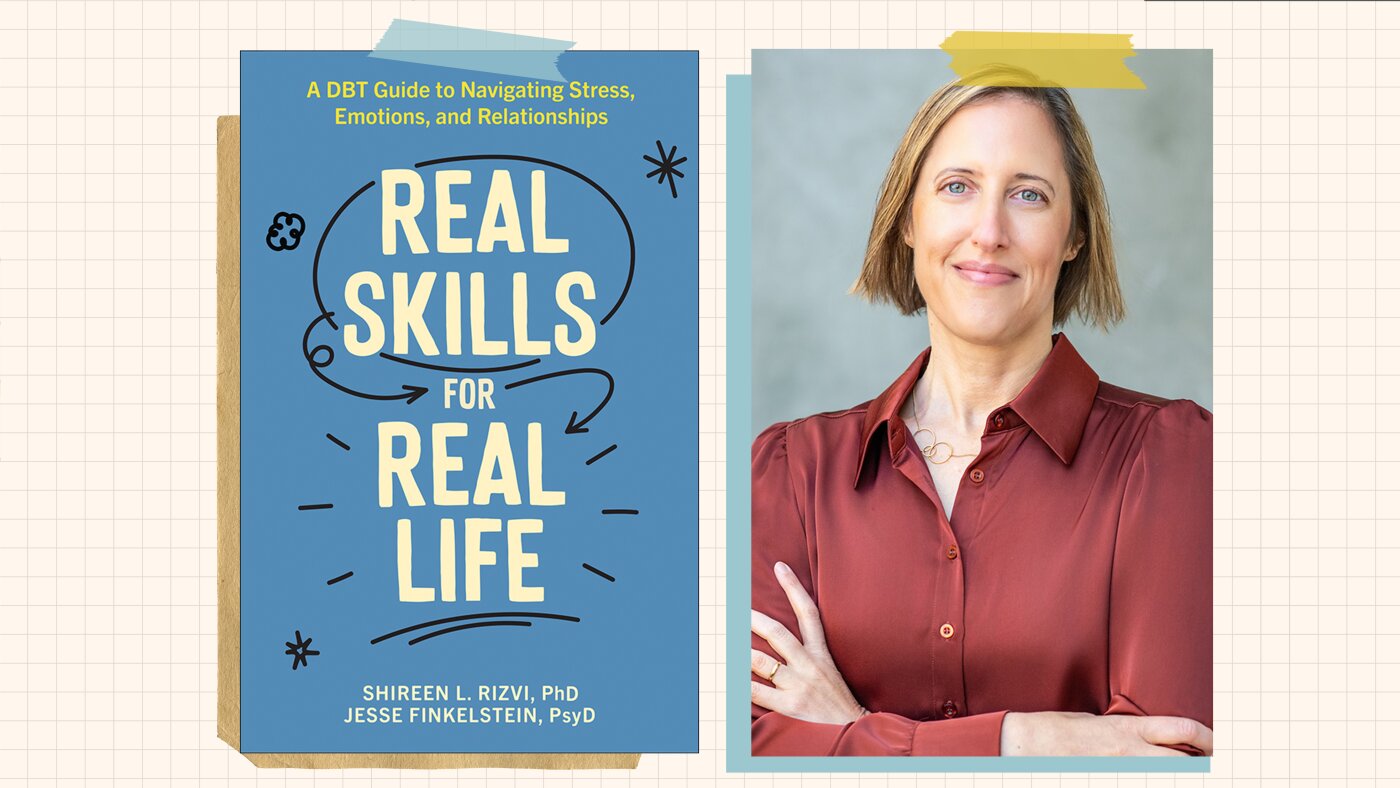
Shireen Rizvi, a psychiatry professor at Montefiore Medical Center and board-certified dialectical behavior therapy specialist, has co-authored a guide presenting evidence-based coping strategies for managing overwhelming emotional states. The book, co-written with clinical psychologist Jesse Finkelstein and published earlier this year, draws on dialectical behavior therapy, an approach originally developed in the 1980s to treat borderline personality disorder but subsequently shown through research to benefit individuals facing various emotional and life challenges.
Rizvi introduces a collection of four techniques grouped under the acronym TIP, designed for moments when distress becomes so severe that rational thought becomes difficult. These methods aim to reduce emotional intensity from extreme levels to moderate levels, thereby restoring sufficient mental clarity to implement additional coping strategies. The four components are temperature immersion, intense physical exercise, paced breathing, and paired muscle relaxation. Each technique operates through distinct physiological mechanisms to interrupt the acute stress response.
Temperature immersion involves submerging the face in a bowl of cold water and ice, which activates the mammalian dive reflex—a survival mechanism that slows heart rate and respiration. Rizvi notes this approach carries contraindications for individuals with heart conditions or those taking beta-blocking medications. Intense exercise, such as running stairs or performing jumping jacks, paradoxically calms the nervous system by first elevating heart rate, then allowing it to decrease when activity stops, while simultaneously triggering endorphin release.
Paced breathing focuses on extending the exhale longer than the inhale, such as breathing in for four counts and out for six, to counteract the chest-based hyperventilation patterns common during distress. Paired muscle relaxation involves sequentially tensing and releasing muscle groups while associating the release with calming thoughts, allowing for greater relaxation than attempting to relax without prior tension. Rizvi emphasizes that a fundamental misconception about distress involves the belief that intense feelings must be eliminated immediately or will persist indefinitely, when in reality emotional states naturally diminish over time.