

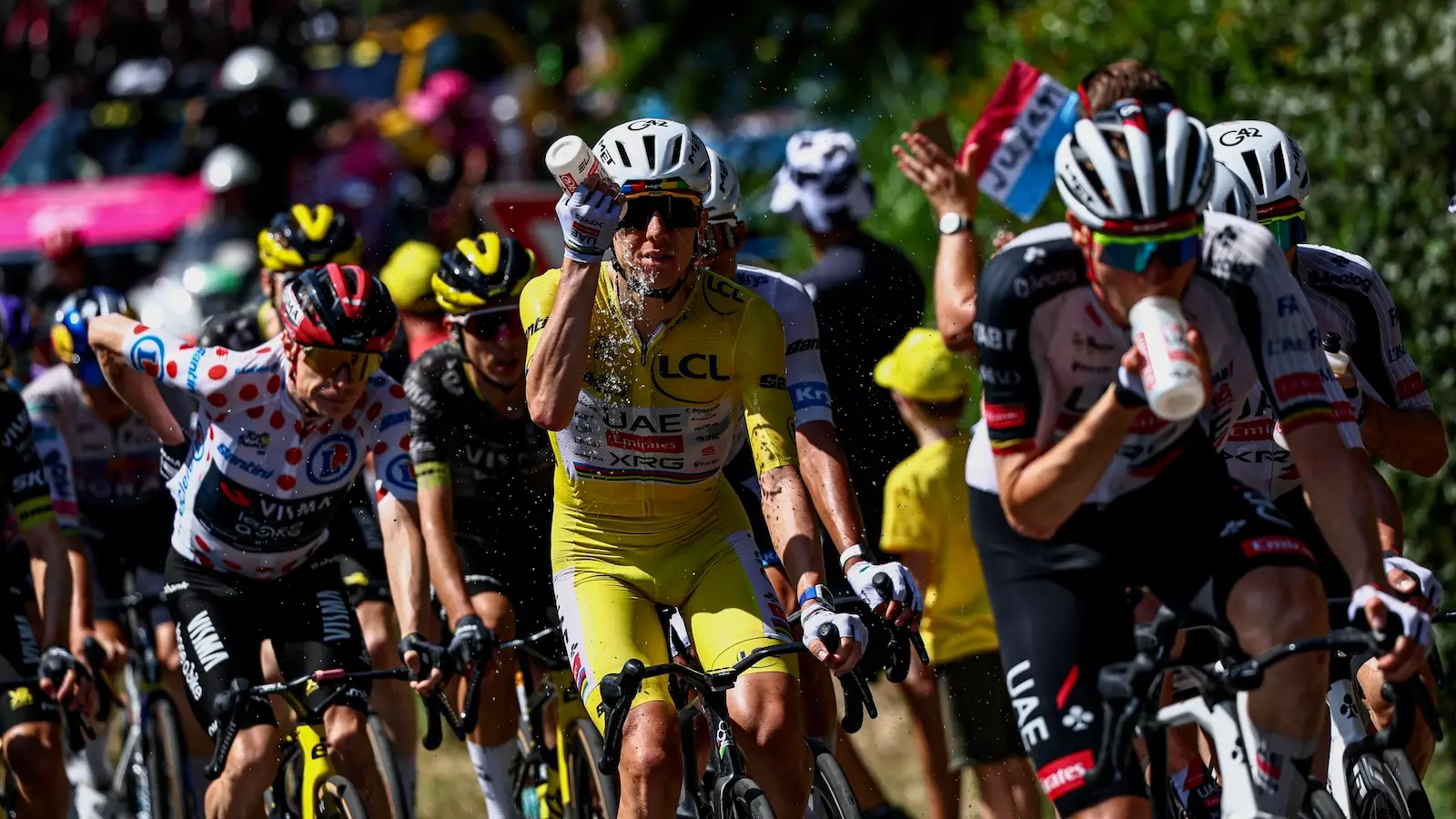
The ongoing Tour de France has been marked by severe weather conditions linked to climate change, presenting challenges to competitors, organizers, and spectators throughout the event. Wildfires threatened the Pyrénées-Orientales region during an early stage, prompting organizers to limit vehicles in the support caravan and request fans avoid portions of the race route. The more significant issue has been an exceptional European heatwave, with the first two weeks of the race averaging 87 degrees Fahrenheit—the highest recorded temperature for that period in the past two decades.
The intense heat has posed genuine health risks to participants. Cyclist Tadej Pogačar reported severe headaches when temperatures exceeded 100 degrees during Stage 4. Teams implemented emergency measures including increased water consumption—one team reported riders drinking approximately 28 bottles daily—and the use of ice vests and ice socks. Race officials took the unprecedented step of shortening Stage 9 by 30 kilometers due to dangerous conditions. Regional authorities were empowered to cancel stages entirely if red heatwave alerts were issued.
The extreme heat has hindered recovery even during rest periods, as many European hotels lack air conditioning and nighttime temperatures remain elevated. Climate researchers have characterized this summer as exceptionally severe, noting that France and Spain have been under sustained heatwave warnings. The conditions have raised broader questions about the sport’s relationship with fossil fuel sponsors, including energy companies like TotalEnergies and Santos that underwrite teams and races.
Going forward, the viability of the Tour’s traditional schedule faces scrutiny. Pogačar has suggested relocating the race outside the summer months, though such changes would disrupt the established order of professional cycling’s major competitions. Organizers have proposed alternatives including adjusted start times, but implementing modifications remains complicated due to logistics and broadcasting requirements.
Article Attribution | Read More at Article Source
Article summary produced by Claude AI