

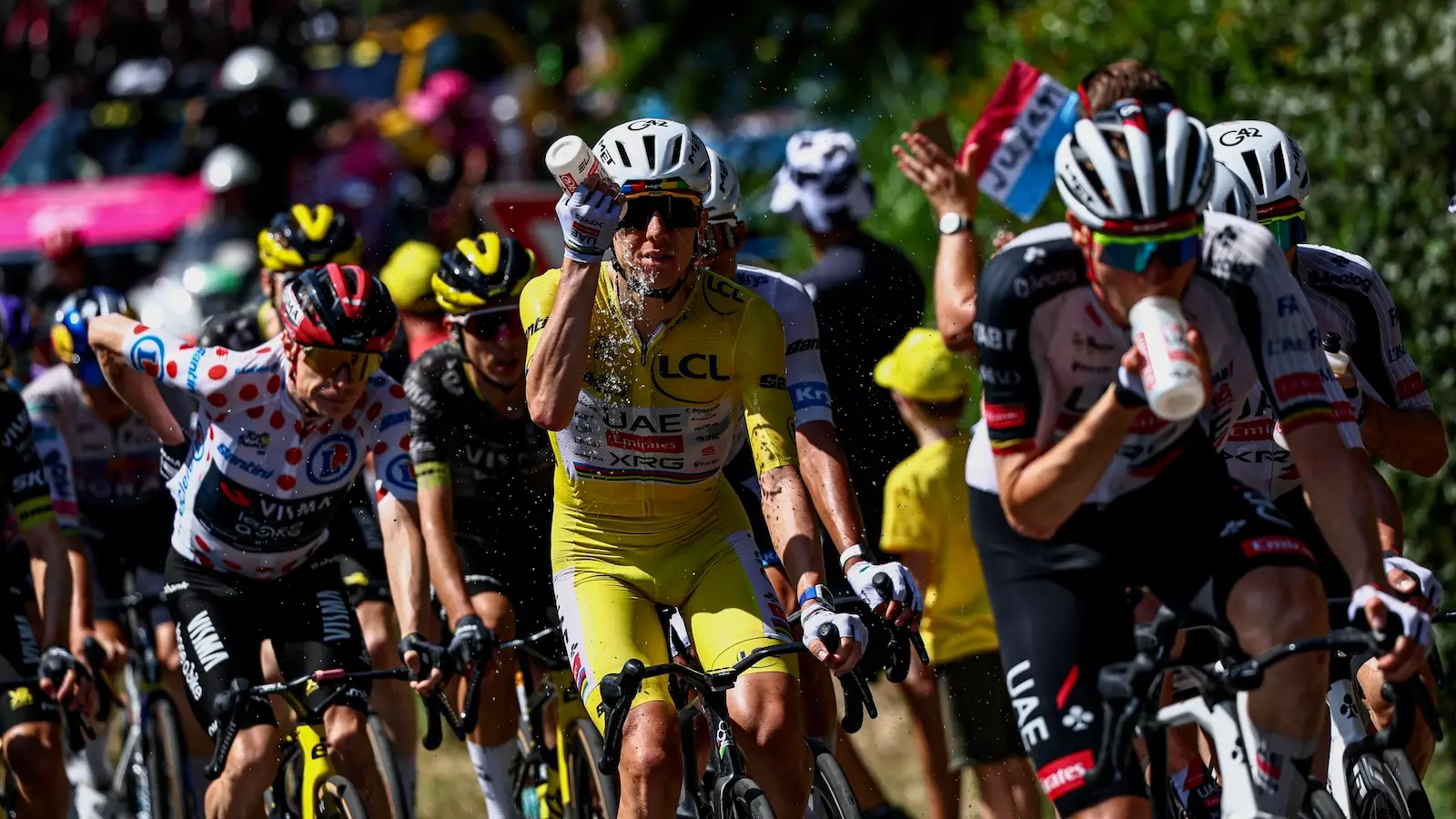
The Tour de France experienced severe weather conditions driven by climate change during its race through late June and early July. Wildfires threatened the Pyrénées-Orientales region during the third stage, forcing organizers to limit support vehicles and request spectators avoid the final portion of that day’s route. The primary challenge, however, was a sustained European heatwave that broke temperature records for the event.
Temperatures during the first two weeks of the race averaged 87 degrees Fahrenheit, the highest documented over the past two decades. Conditions proved particularly taxing because riders compete across 21 stages, averaging roughly 100 miles daily over nearly three weeks, often at speeds around 30 mph. The terrain includes challenging climbs through the Alps and Pyrenees. Athletes reported severe physical effects, with Tadej Pogačar, the race’s front-runner, experiencing headaches when temperatures exceeded 100 degrees. Race organizers implemented emergency measures including relaxed hydration protocols, with some teams reporting their riders consumed around 28 bottles of water daily compared to normal consumption levels.
Riders utilized ice vests before stages and ice socks during competition to manage heat exposure. Organizers shortened one stage by 18.6 miles for the first time in Tour history. Night conditions provided minimal relief, as temperatures remained elevated and many European hotels lack air conditioning, preventing adequate athlete recovery. The prolonged exposure to extreme heat presented genuine health risks for competitors despite their specialized training.
The conditions prompted Pogačar to suggest relocating the Tour away from summer months in hot regions. Climate scientists characterized the heat as clearly extreme, noting France and Spain experienced weeks of heat wave warnings. The event’s sponsorship by fossil fuel companies, including TotalEnergies and Santos, drew increased scrutiny given their role in climate change. Potential solutions discussed included altering race schedules or start times, though significant logistical and broadcast complications would accompany even modest changes. The Tour concluded later that week with continued focus on how the sport might adapt to ongoing climate impacts.
Article Attribution | Read More at Article Source
Article summary produced by Claude AI