

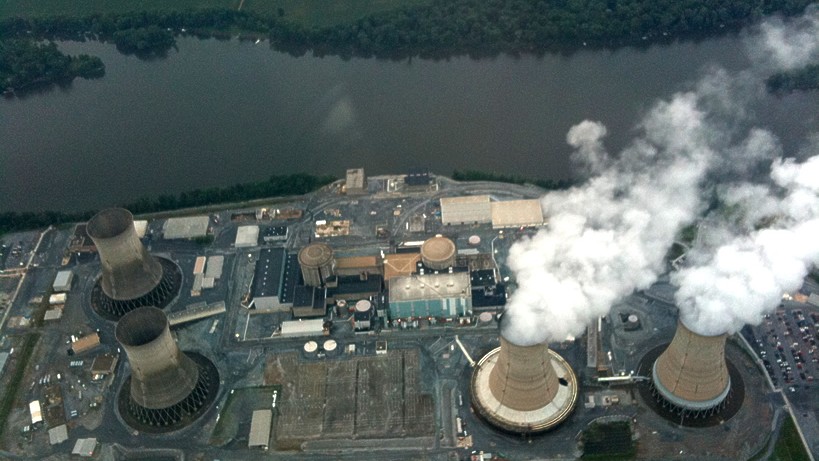
The U.S. Department of Energy has designated Utah, Tennessee, Oklahoma, Louisiana, and Idaho as candidates to develop Nuclear Lifecycle Innovation Campuses under the Trump Administration’s nuclear expansion strategy. The initiative aims to establish facilities capable of managing the complete nuclear fuel cycle, including enrichment, fabrication, reprocessing of spent fuel, and final disposition of radioactive waste.
The department projects that each campus could attract up to $50 billion in capital investment, generate approximately $10 billion in state and local tax revenue, and create roughly 25,000 jobs. The campuses may also support advanced reactor deployment, power generation, advanced manufacturing operations, and data center facilities depending on state preferences and regional capabilities. The selections followed review of 28 applications submitted by 26 states seeking to host these facilities.
The initiative aligns with the administration’s broader goal to quadruple U.S. nuclear energy capacity from approximately 100 gigawatts currently to 400 gigawatts by 2050. Nuclear waste management has remained an unresolved challenge for decades, with a previous effort to establish a permanent disposal site at Yucca Mountain in Nevada abandoned due to local opposition. Currently, spent nuclear fuel is stored at individual power plants and former nuclear sites across the country.
As of 2025, more than 95,000 metric tons of spent nuclear fuel were stored across 79 locations in over 30 states, with estimates projecting this volume could reach approximately 180,000 metric tons once current reactors complete their operational lifespans. The selected states possess relevant nuclear infrastructure and expertise, including historical involvement in the Manhattan Project and home to major national laboratories focused on nuclear research and fuel enrichment, such as Oak Ridge National Laboratory in Tennessee and Idaho National Laboratory.
Article Attribution | Read More at Article Source
Article summary produced by Claude AI