

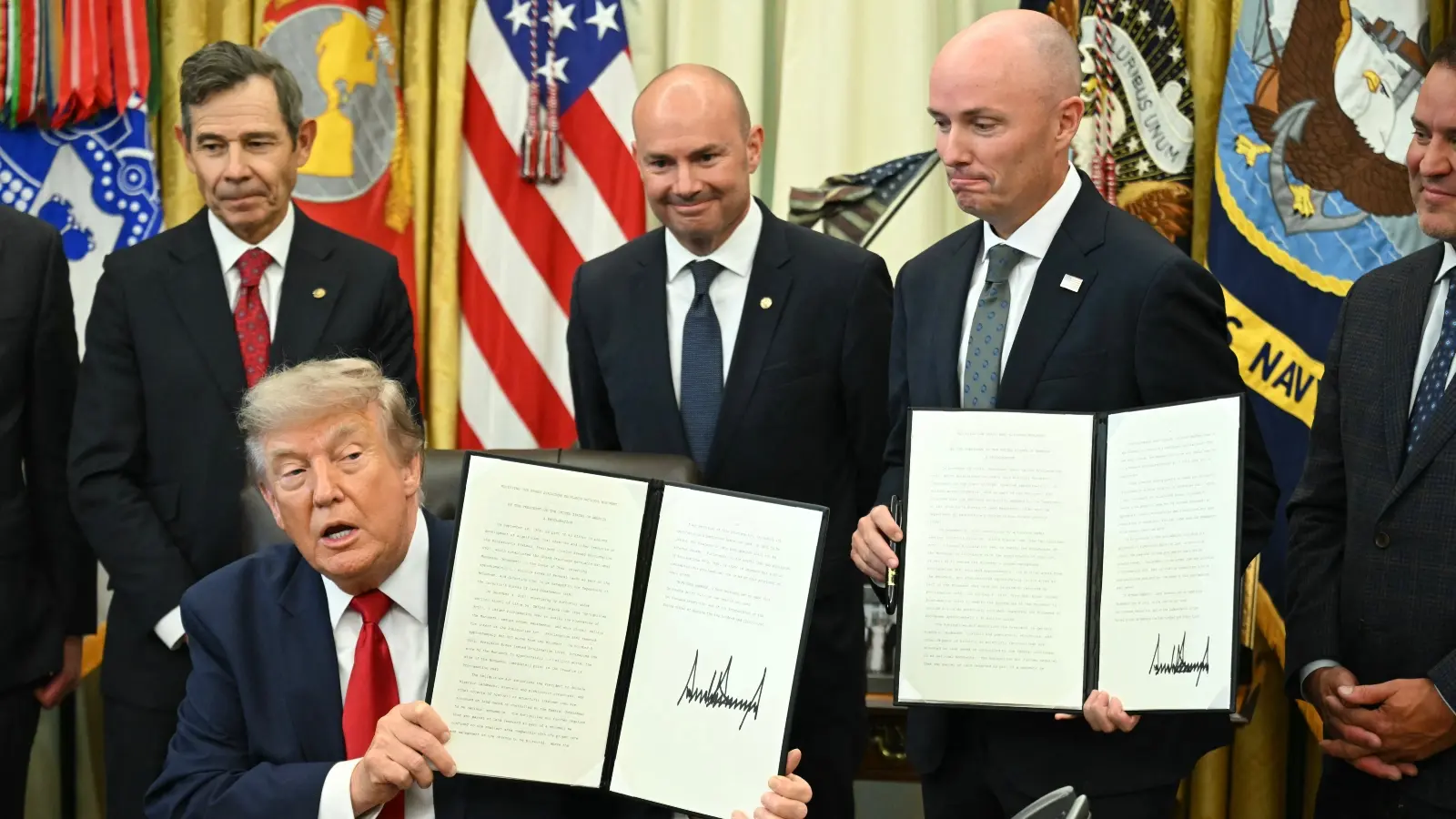
On Monday, President Donald Trump signed executive orders reducing Bears Ears and Grand Staircase-Escalante National Monuments in southern Utah to 302,600 total acres, down from over 3 million acres of protected public lands. The reductions represent a substantially larger cutback than similar actions taken during Trump’s first term, when Bears Ears was reduced by 85 percent and Grand Staircase-Escalante was cut nearly in half. The current orders reduce the monuments to less than a quarter of the acreage that remained following the previous administration’s reductions and subsequent restoration under President Joe Biden.
According to the executive orders, the changes will take effect in 60 days and align with the administration’s stated goals of opening public lands for extraction activities. The proclamations emphasize placing decision-making power with local communities, though tribal officials reported they were not consulted on the reductions. The administration’s action also resulted in the termination of an inter-tribal working group that had led co-stewardship efforts at Bears Ears, marking the first federal monument co-management arrangement between the government and tribal nations.
Tribal representatives and environmental advocates have expressed strong opposition to the reductions. Members of affected tribes emphasized the cultural, spiritual, and practical significance of these landscapes, which contain archaeological sites sacred to local nations and serve as sources of traditional medicines, food, and prayer sites. Legal experts noted that the Antiquities Act of 1906 grants presidents power to create monuments but does not explicitly authorize rescinding them, a power that rests with Congress. The decision comes amid ongoing litigation challenging the scope of presidential authority under the Antiquities Act.
Environmental organizations and tribal coalitions have pledged to mount legal challenges similar to those filed against Trump’s first-term reductions. Democratic members of Congress condemned the orders as prioritizing extractive industries over public interest and cultural preservation. The reductions align with Project 2025, a policy framework for the current administration that has called for reducing monument sizes and potentially repealing the Antiquities Act entirely. Polling data suggests broad public support for the monuments and protection of public lands, though administration officials have characterized the expansion of access to extraction as beneficial to local economies.
Article Attribution | Read More at Article Source
Article summary produced by Claude AI