

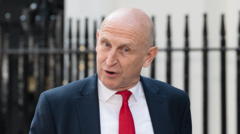
The United Kingdom’s government borrowed £16 billion in June, a figure that fell marginally below official projections and represented a notable decrease compared to the prior year’s borrowing of approximately £23.9 billion. The Office for Budget Responsibility had predicted June borrowing at £16.3 billion, making the actual result a modest positive development as newly appointed Prime Minister Andy Burnham and Chancellor John Healey began implementing their policy agenda.
Despite the single-month improvement, cumulative borrowing through the first part of the financial year reached £57.6 billion, positioning the government ahead of its annual forecast by £2.7 billion. Economists cautioned that while the June figure offered temporary relief, the broader fiscal picture remained constrained, with limited capacity for additional government spending or tax cuts. The total public sector debt stood at approximately £3 trillion, equivalent to nearly the entire annual economic output of the nation when measured by conventional metrics, though a revised calculation method showed £2.7 trillion or 84.5 percent of GDP.
The government’s borrowing benefit came partly from increased tax revenues and reduced payments on inflation-linked debt, with June interest payments falling to £11.8 billion, approximately one-third lower than the equivalent month the previous year. Nevertheless, this remained the fourth-highest June interest payment on record. The new administration announced plans to eliminate value-added tax on household electricity beginning in October, funded through cancellation of a digital identification program, though this decision drew criticism from opposition figures regarding unfunded commitments.
Labour market conditions remained relatively stable, with unemployment holding steady at 4.9 percent. Regular wage growth, excluding bonuses, increased at an annual rate of 3.4 percent during March through May, though private sector wage increases dropped below 3 percent for the first time since 2020. Economists suggested this subdued wage growth would likely influence the Bank of England’s upcoming interest rate decision, while noting that households faced renewed cost-of-living pressures from anticipated energy bill increases in the coming months.