

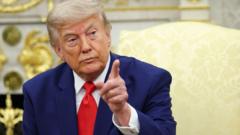
The United States has instituted new tariff rates ranging from 10% to 12.5% on imports from approximately 60 trading partners, covering an estimated 99.4% of American imports. The affected nations include major economic players such as the United Kingdom, China, the European Union, Brazil, Japan, and Australia. The administration justified the action by citing concerns that these trading partners have not adequately addressed forced labour in their supply chains.
Trade experts have questioned the stated rationale for the tariffs. Caroline Freund, Dean of the UC San Diego School of Global Policy and Strategy, contended that the forced labour justification serves as a legal mechanism to sustain tariff measures whose primary objective relates to reducing the US trade deficit and supporting domestic manufacturing. The new duties replace an identical levy that expired earlier in the week and follow a pattern of tariff implementation that began when President Trump returned to office last year.
The tariff announcement has drawn criticism from multiple nations and business leaders. The British Chambers of Commerce noted that the UK faces a disadvantage compared to the European Union, which negotiated an all-inclusive 10% rate on its goods, while the UK is subject to universal 10% tariffs alongside potential additional duties on specific products. Brazil characterized its 12.5% rate as unjustified, while Japan and Australia expressed regret over the measures. China denied the forced labour allegations and opposed the unilateral tariff approach.
Trade policy analysts indicated the tariffs may prompt economic consequences and strategic responses from affected nations. Some trading partners may seek to reduce their reliance on the US market by establishing commercial arrangements with other countries. The levies are anticipated to increase costs for businesses and consumers, though the impact could be mitigated by exemptions on certain goods. The administration is reportedly investigating 16 additional countries over allegations of manufacturing overcapacity, suggesting further tariff actions may be forthcoming.
Article Attribution | Read More at Article Source
Article summary produced by Claude AI