

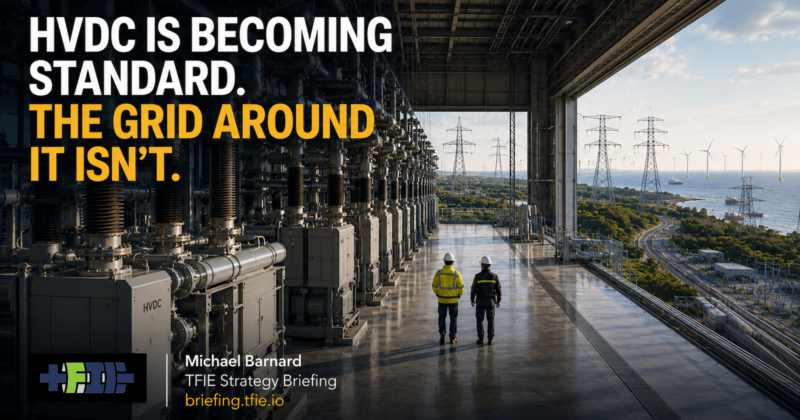
High-voltage direct current transmission is transitioning from a specialized tool for specific applications into a standard component of transmission planning infrastructure. The European market is converging on 2 gigawatt, 525 kilovolt HVDC systems with common converter configurations, while other regions are developing comparable standards including 3 gigawatt projects in the United States and India. This standardization allows manufacturers and developers to build repeatable product families rather than treating each project as a custom engineering endeavor.
The physical standardization of HVDC equipment is outpacing the development of compatible electrical grid systems and standards. As conventional power generators retire and more electricity generation connects through power electronics, transmission systems must do more than transport bulk electricity. The converters themselves increasingly must contribute to grid stability through grid-forming controls, but these controls lack a coherent global definition and vary by regional grid codes, requiring vendors to maintain different implementations.
The challenge intensifies as grids move toward multi-terminal and multi-vendor HVDC systems. Equipment from different manufacturers must work together seamlessly, which involves more than agreeing on voltage and power levels. Control modes, protection behavior, interfaces and intellectual property considerations complicate integration, making each project potentially complicated without standardized approaches across vendors.
Beyond technical interoperability, planning frameworks present significant obstacles. HVDC’s value lies in moving large electricity volumes across long distances, often spanning utility territories, states, borders and regulatory jurisdictions. While Europe has developed institutions for multinational grid planning, North America remains significantly weaker in inter-regional coordination, cost allocation and determining system benefits. Manufacturing capacity constraints are beginning to ease, shifting bottlenecks toward system architecture, interoperability standards, cross-border planning and project execution. A shortage of experienced power engineers who understand control systems, protection, high voltage and integrated grid behavior represents another critical limiting factor for expansion.
Article Attribution | Read More at Article Source
Article summary produced by Claude AI