

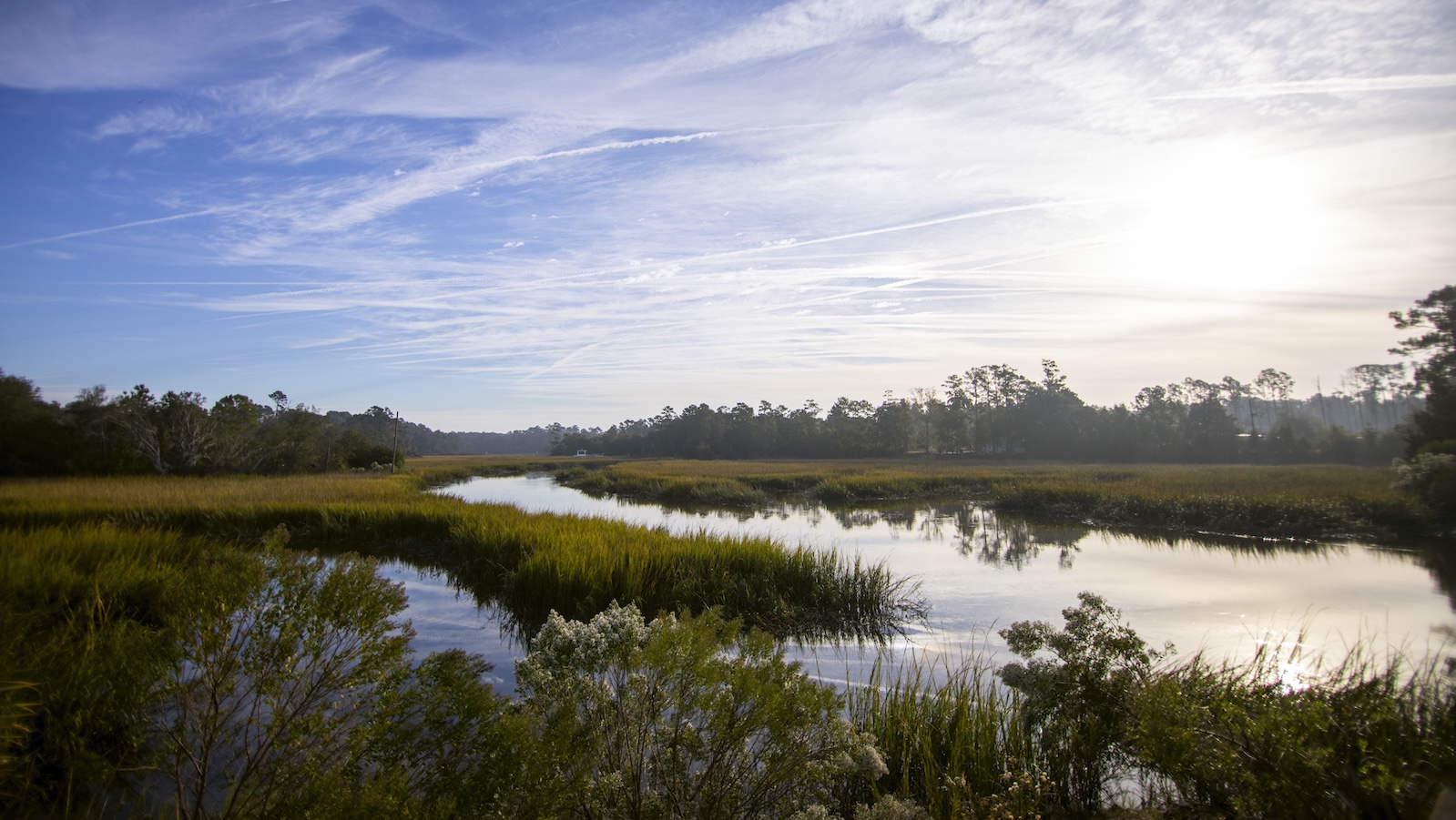
Georgia’s coastal communities are implementing a new approach to address erosion and rising sea levels by restoring salt marshes through living shorelines rather than conventional hardened structures. A dredge pit near Midway, Georgia, approximately 50 miles south of Savannah, exemplifies the challenge: erosion from tidal forces has transformed a deep excavation into a shallow mudflat while cutting away several feet of surrounding land. Local officials are working to restore native marsh grasses whose root systems can naturally stabilize eroding banks.
The strategy reflects growing recognition that Georgia’s salt marshes, which comprise more than a third of connected marsh habitat along the Southeastern U.S. coast, require more than protection in place. According to wetland scientists, salt marshes naturally persist in twice-daily flooding through specific adaptive mechanisms. However, as sea levels are projected to rise 1 to 2 meters along Georgia’s coast over the next 75 years, these ecosystems must also shift inland to survive. This migration is only possible if the marshes encounter suitable terrain rather than developed land or infrastructure.
A new coalition effort called the South Atlantic Salt Marsh Initiative has identified more than 56,000 acres in Georgia where marshes are likely to migrate but remain open to development. Rather than imposing binding policies or seizing property, the plan serves as a decision-making guide for landowners and officials weighing short-term development against long-term coastal resilience. Conservancy leaders emphasize that the approach aims to shift land use conversations toward considering whether development should extend to the water’s edge or whether space should be preserved for natural migration. For coastal communities facing accelerating environmental change, the strategy represents an attempt to align human infrastructure decisions with ecological processes already reshaping the shoreline.
Article Attribution | Read More at Article Source
Article summary produced by Claude AI