

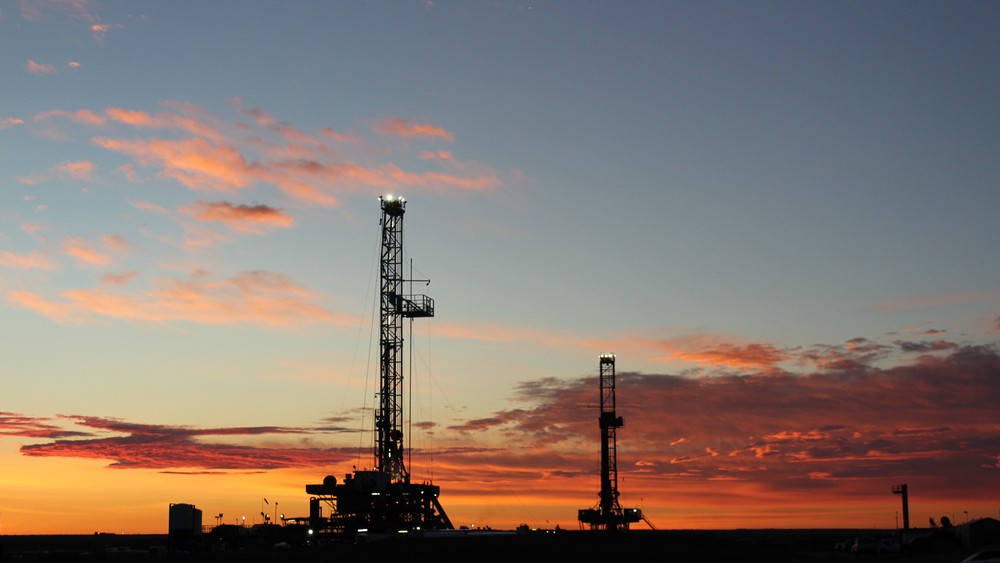
Argentina’s unconventional oil and natural gas production from the Vaca Muerta shale formation has reached record levels, fundamentally reshaping the country’s energy profile. Government data from June 2026 indicates oil production stood at 868,763 barrels per day, while natural gas output reached 5.4 billion cubic feet per day. Though both figures declined slightly from the previous month, they remained substantially higher than the corresponding period a year earlier, reflecting the sustained growth trajectory of Argentina’s hydrocarbon sector.
The transformation has been dramatic over the past decade. In June 2016, when Vaca Muerta development began in earnest, Argentina produced 500,580 barrels of crude oil and 4.4 billion cubic feet of natural gas daily. By June 2026, crude oil output had increased 74% while natural gas production rose 23%. Shale resources now dominate the national energy landscape, comprising 71% of total oil production and 70% of natural gas output as of June 2026. This expansion has occurred alongside a significant decline in conventional production, with conventional oil down 13% year-over-year and conventional natural gas falling 15% in the same period.
The Vaca Muerta formation exhibits geological characteristics that distinguish it globally. The shale play ranks among the world’s top five by resource volume, containing an estimated 16 billion barrels of recoverable oil and 308 trillion cubic feet of natural gas. Its thickness exceeds most major U.S. shale plays, high organic content rivals the Delaware and Bakken formations, and reservoir pressures facilitate cost-effective extraction. The crude extracted possesses light sweet characteristics with API gravity between 39 and 42 degrees and minimal sulfur content, making it economically attractive to refine.
Operationally, the Vaca Muerta’s economics compete favorably with established U.S. shale plays despite higher operational costs in Argentina. The formation’s estimated breakeven price of $36 per barrel compares competitively with major U.S. shale operations ranging from $34 to $51 per barrel, with further cost reductions anticipated as infrastructure develops. These conditions have attracted sustained foreign investment interest in what analysts consider an emerging premier global shale play.
The shale boom has transformed Argentina’s economic position, converting the historically crisis-prone nation into a net energy exporter while strengthening regional energy security. This development carries heightened strategic significance given current geopolitical disruptions affecting global energy supplies, positioning the Vaca Muerta as a critical asset for the Americas’ energy independence and economic growth prospects.
Article Attribution | Read More at Article Source
Article summary produced by Claude AI