

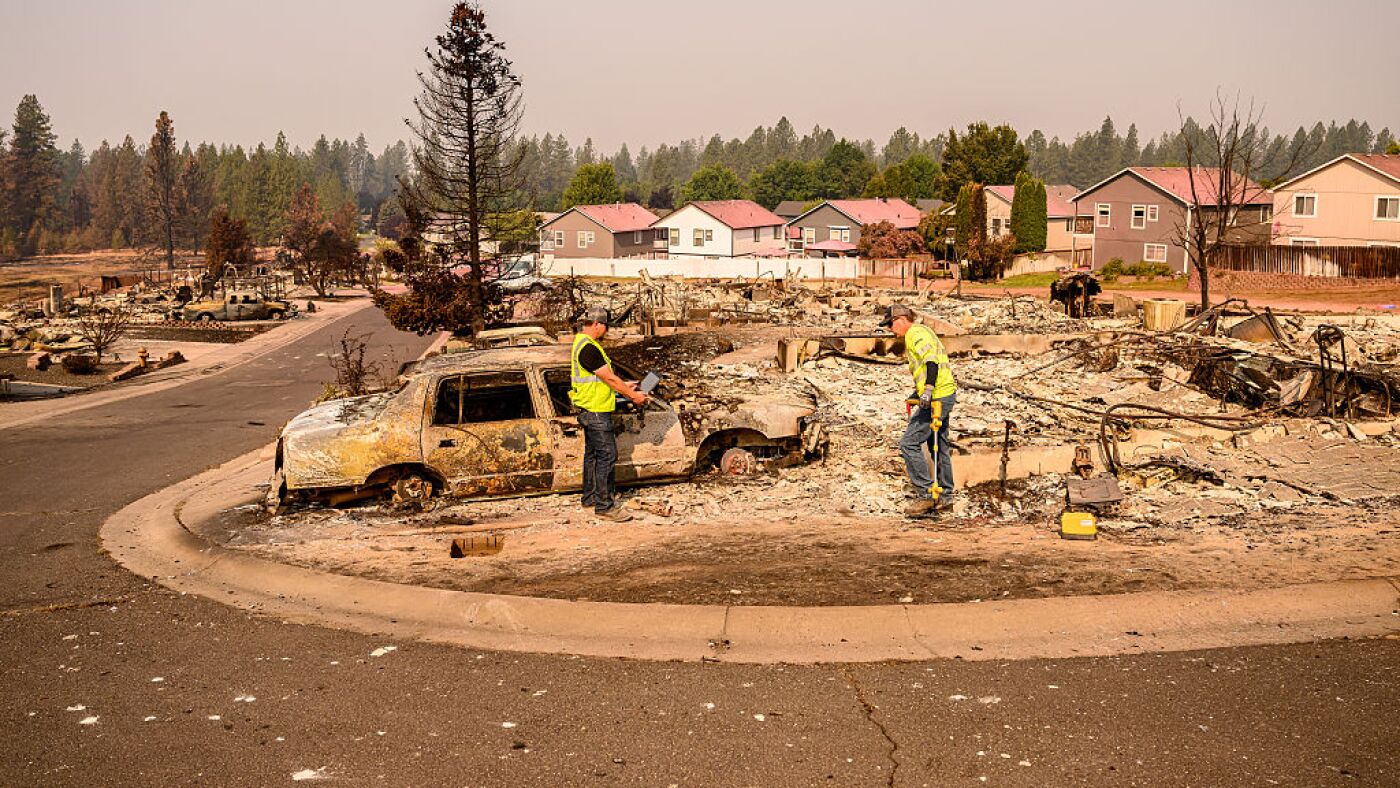
Multiple Western states are encountering significant obstacles in implementing wildfire safety regulations designed to protect residential areas from increasingly severe fire seasons. The challenge reflects broader tensions between fire prevention measures and competing community priorities, as well as differing approaches to managing wildfire risk across jurisdictions.
In Spokane, Washington, wildfires earlier this month destroyed more than 800 homes and structures, prompting renewed attention to safety measures that experts recommend for homes in high-risk areas. These precautions include fire-resistant siding materials, cleared vegetation around home perimeters, and trimmed tree branches—modifications that research indicates help structures withstand wind-driven embers, the primary mechanism of rapid wildfire spread. Despite years of work developing statewide building codes and vegetation management rules, Washington state has faced significant public resistance. Conservation groups expressed concerns that vegetation management requirements could conflict with environmental goals to expand urban tree canopy and provide cooling shade during heat waves. Wildlife advocates worried that trees needed for bird habitat would be destroyed. In response to the pushback, state legislators scaled back the regulations. A 2024 bill reduced enforcement measures, retaining requirements for fire-resistant roofs and siding on new construction while eliminating mandatory vegetation management for homeowners.
Oregon experienced similar challenges while developing its wildfire regulations. Residents worried that state designations of high-risk areas could lead insurance companies to cancel policies, and misinformation about vegetation restrictions circulated online. These concerns contributed to the repeal of Oregon’s wildfire rules. Unlike wildfire management, which is handled by states and local governments, flood risk management falls under federal oversight, resulting in a fragmented national approach to wildfire protection.
Washington state officials indicate that new wildfire hazard maps incorporating past fire history will be released in December, with the intention of more accurately identifying at-risk areas. California has led the region in wildfire building code standards, requiring fire-resistant construction in high-risk areas for nearly two decades. Experts note that insurance companies have already developed sophisticated proprietary wildfire risk maps independent of state efforts.
Article Attribution | Read More at Article Source
Article summary produced by Claude AI