

A newly proposed framework has led Hamas to agree to disarm in Gaza, contingent on Israel withdrawing from approximately 70% of the territory it currently occupies. This represents the first instance of Hamas accepting such a disarmament arrangement, though substantial challenges threaten to derail implementation.
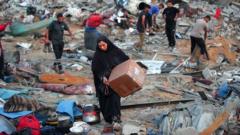
The humanitarian situation in Gaza remains dire, with over 2 million Palestinian civilians facing catastrophic conditions. According to the Hamas-run health ministry, figures viewed as reliable by the UN, more than 70,000 Palestinians were killed during the conflict and over 1,000 since the ceasefire took effect. The territory has been extensively damaged through both military operations and organized destruction efforts by Israeli demolition contractors. Many Palestinians and regional leaders interpret these conditions as part of a strategy to force displacement, while a significant majority of Israelis view complete Hamas disarmament as essential given the group’s October 2023 attack that killed nearly 1,200 people and took 251 hostages.
Multiple political pressures complicate prospects for agreement. Israeli Prime Minister Benjamin Netanyahu faces domestic elections at the end of October while trailing in polls and managing corruption charges that would accelerate if he loses office. Internationally, he depends heavily on U.S. support. President Donald Trump, facing midterm elections in November, needs a diplomatic victory in Gaza to strengthen his political position. Netanyahu has positioned himself as uniquely capable of managing American relations, making him vulnerable to public criticism from Trump before Israeli elections.
Hamas operates under severe constraints following decimation of its leadership and fighter ranks. The group has shifted toward rebuilding grassroots support through educational and charitable programs while navigating challenges from rival Palestinian factions and militias backed by Israel. Political leader Khalil al Hayya played a crucial role in Hamas accepting the framework, with significant diplomatic work performed by Egypt and Turkey.
Successful implementation requires step-by-step confidence-building measures and sustained U.S. engagement. However, escalating violence in the West Bank, where 2026 is tracking toward becoming the most violent year on record, threatens to destabilize negotiations. Without providing Palestinians a political pathway to self-determination, experts warn the process will fail to prevent future conflict cycles.
Article Attribution | Read More at Article Source
Article summary produced by Claude AI