

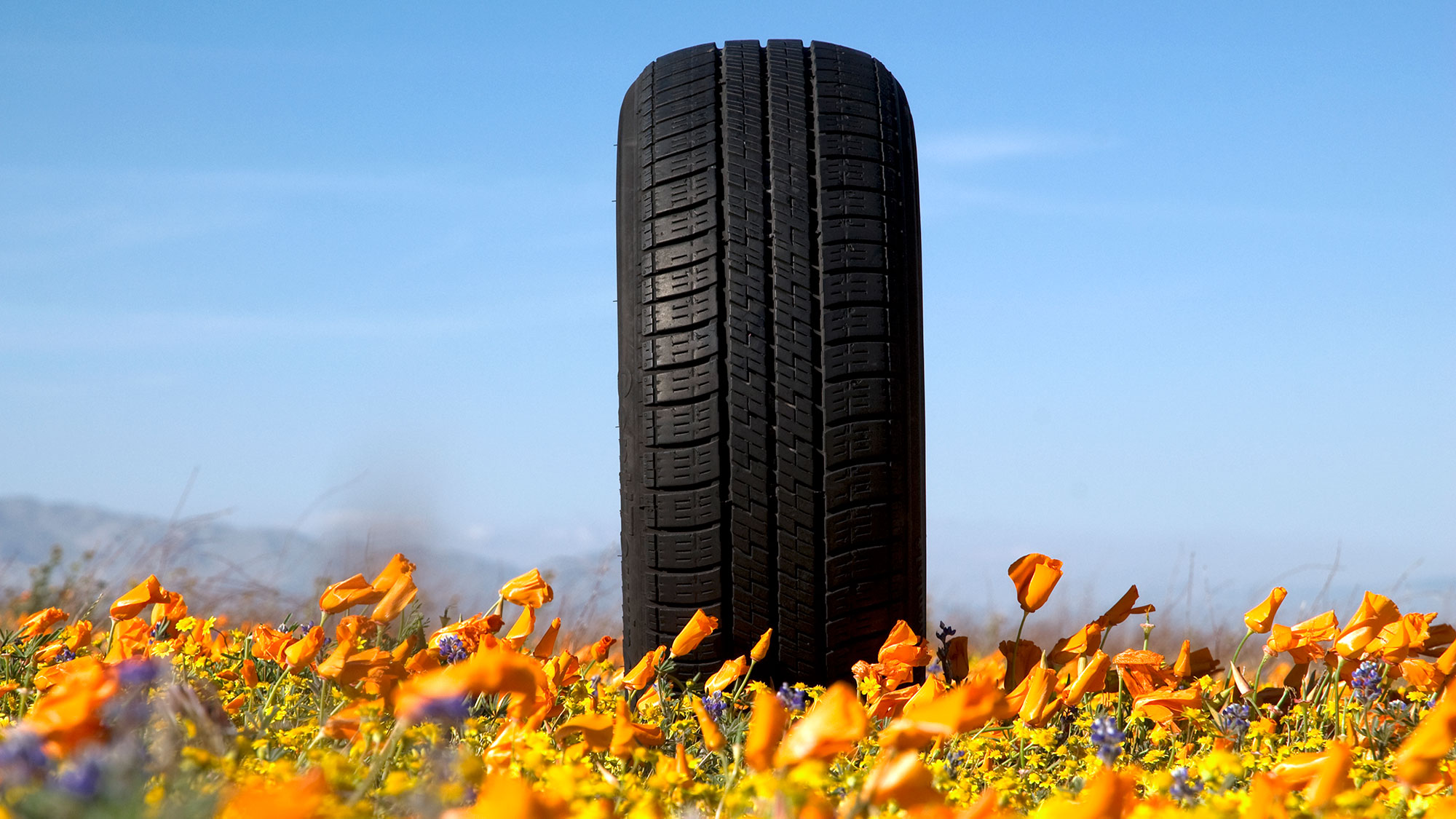
California’s Energy Commission unanimously approved regulations establishing the first statewide standards for replacement tire efficiency, marking a significant development in vehicle fuel economy standards. The rule aims to ensure that replacement tires sold within the state maintain energy efficiency levels comparable to original equipment tires. A labeling system using “leaf” ratings will help consumers identify more efficient options, similar to existing Energy Star labeling for appliances.
The regulations will be phased in over two periods, with initial standards targeting the least efficient tires beginning in 2029 and stricter requirements taking effect in 2033. This extended timeline was adopted to address manufacturer concerns about adaptation periods. Certain tire categories, including snow tires and competition tires, received exemptions, while all-weather tires were excluded but will be monitored for future regulation.
State projections indicate the standards could reduce carbon dioxide emissions by 2 million tons annually, equivalent to removing approximately 400,000 vehicles from roadways. The California Energy Commission estimated net consumer savings of $85 to $153 per tire set over the tire’s lifetime, offsetting higher upfront costs of between $6 and $26 per set through reduced fuel consumption. Consumer advocates emphasized that replacement tires are often less efficient than original equipment, requiring consumers to unknowingly purchase costlier options.
The tire industry has expressed divided opinions on the regulations. Companies including Michelin and ENSO publicly supported the efficiency goals and feasibility of meeting proposed thresholds, while industry groups representing automotive parts manufacturers raised concerns about cost burdens on working-class consumers. Some industry estimates placed potential cost increases significantly higher than state calculations.
The rulemaking effort has extended over two decades, with initial legislation passed in 2003. Development paused in 2007 when federal efforts began but were ultimately abandoned. The Energy Commission revived the project approximately 2020. Industry observers anticipate California’s regulations will influence tire efficiency standards in other states, similar to the state’s previous impact on emission and lightbulb standards.
Article Attribution | Read More at Article Source
Article summary produced by Claude AI