

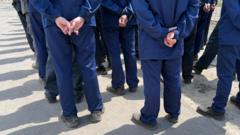
A camp in Western Ukraine holds prisoners of war captured while fighting for Russia, including soldiers born in Ukraine itself. The BBC conducted interviews with these prisoners under conditions designed to minimize coercion, speaking with them away from guards and without cameras present.
Among those interviewed was Anton, who was ten years old when his region of eastern Ukraine came under Moscow-aligned control. He turned eighteen when Russia launched its full-scale invasion and immediately volunteered to fight, stating he was defending his land. He identifies as Russian rather than Ukrainian, citing his family background and roots. Anton absorbed Russian state messaging that portrays Kyiv authorities as illegitimate, and he speaks largely in Russian political slogans. Other prisoners reported that most of their comrades have been killed in fighting, and volunteering has declined despite substantial sign-up bonuses, suggesting pressure on Russia’s voluntary recruitment model.
Another prisoner, Artyom from Donetsk, also volunteered after his region came under heavy fire in 2014. However, his experience has left him disillusioned—his commander was ineffective and he never received his promised 400,000 rouble signing bonus, while Russian soldiers received higher payments. A third interviewee from Donetsk region claimed he was forcibly conscripted, speaking nervously about his situation. According to official tallies cited in intelligence reports, more than 50,000 Ukrainians have been conscripted against their will in occupied areas, though some estimates are higher.
When Ukraine captures its own citizens fighting for Russia, they are tried for treason but ultimately placed in prisoner-of-war camps alongside Russian soldiers. Ukraine’s coordination headquarters for prisoners of war describes such individuals as very pro-Russian with blurred national identity. Most Ukrainian-born prisoners interviewed came from areas occupied since 2014 and joined the Russian military voluntarily, though motivations varied from ideological conviction to financial desperation and desire to avoid prosecution.
Prisoners work in camp workshops producing garden items, coffins, and artificial Christmas trees, using wages to purchase additional food and cigarettes. Some, like Sergei, express intentions to retire rather than return to combat, though most have no realistic prospect of avoiding further deployment.
Article Attribution | Read More at Article Source
Article summary produced by Claude AI