

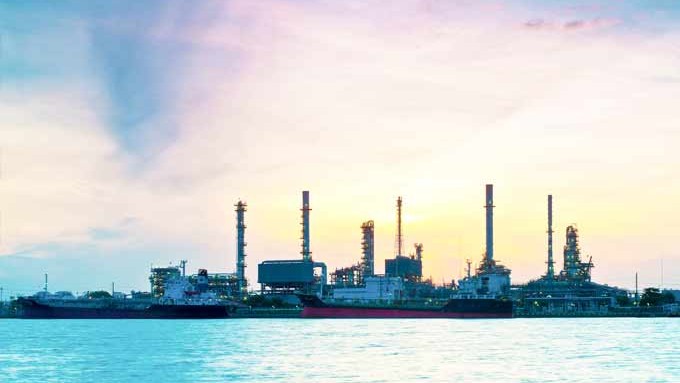
Carbon capture technology has advanced significantly in its ability to remove and store carbon dioxide, but the industry faces a critical challenge: most announced projects never reach the construction phase, and the barrier is primarily commercial rather than technical. While questions about solvent effectiveness, compression, transportation, and storage security remain relevant, they no longer adequately explain why the sector produces far more announcements than actual investment decisions.
The European Commission’s Industrial Carbon Management Strategy illustrates the scale of ambition, targeting at least 50 million tonnes of annual CO2 storage capacity by 2030, with projections of roughly 280 million tonnes of captured CO2 annually by 2040 and around 450 million tonnes by 2050. Achieving these industrial-scale targets requires more than demonstration projects—it demands common specifications, transport networks, storage facilities, measurement standards, liability frameworks, and customers willing to commit to long-term contracts. The fundamental problem is interdependency: every participant waits for bankability from the others, creating a deadlock where emitters lack conventional product premiums, transport operators need guaranteed volumes, and storage developers require confidence in future deliveries.
Norway’s Northern Lights project has emerged as a significant breakthrough in addressing these commercial barriers. Rather than requiring each emitter to develop dedicated pipelines and storage sites, the project allows customers to liquefy captured CO2, ship it to terminals, and purchase transport and permanent storage as standardized services. Phase 1 provides 1.5 million tonnes per year of capacity, with initial capacity fully booked following the first injection in 2025. A planned second phase aims to expand to at least 5 million tonnes annually from 2028. The innovation lies not primarily in achieving greater scale but in creating a commercial model that separates storage access from complete-chain ownership.
The United Kingdom has adopted a complementary strategy through industrial clusters with tailored business models. Because different emitters—gas power stations, cement plants, waste incinerators, and engineered carbon-removal facilities—generate revenue differently, the UK develops varied contracts addressing their distinct exposure to fuel costs, output markets, capture performance, and competition. Regulated transport and storage networks receive frameworks supporting capital investment before utilization reaches maturity. Final contracts for specific projects in late 2025 marked a shift from targets toward contractual risk allocation.
While the EU Emissions Trading System provides economic incentives through carbon pricing, volatile allowance prices alone cannot secure decades-long project financing against construction debt, operating costs, and transport fees. Carbon contracts for difference, regulated-asset models, minimum-volume commitments, and government-backed storage development address different aspects of the financing gap. Cluster models further enhance viability by transforming isolated capture plants into regional industrial infrastructure serving multiple sectors, lowering unit costs while creating options for both industrial and direct-air-capture sources to utilize shared storage systems.
Article Attribution | Read More at Article Source
Article summary produced by Claude AI