

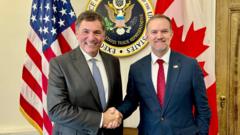
Trade negotiations between Canada and the United States have intensified, with negotiators meeting multiple times following President Donald Trump’s decision to pause threatened tariffs on Canadian goods. The talks appear to focus on several key sectors including steel, aluminum, automobiles, and agricultural products.
During these discussions, Prime Minister Mark Carney has asked Canadian provincial leaders to end their existing boycott on US alcohol products, according to statements from provincial premiers. Most Canadian provinces implemented the alcohol ban last year in retaliation for US tariffs. The wine and spirits industry from the United States has reported export declines exceeding 70% since the boycott commenced. Nova Scotia Premier Tim Houston acknowledged the request, noting it had been a significant concern for US interests, though he questioned whether Canadian consumers would purchase the products once returned to shelves.
Reports indicate the emerging agreement would reduce US tariffs on Canadian steel and aluminum to 25% from the current 50%, and potentially lower the headline tariff rate on Canadian vehicles from 25% to 15%. The US has also requested additional concessions, including removal of remaining Canadian retaliatory tariffs on American vehicles and adjustments to dairy import quotas. Canadian officials have stated that the country’s dairy supply management system will remain unchanged.
Provincial leaders have expressed mixed reactions to the potential deal. Manitoba Premier Wab Kinew indicated his province would restore US alcohol sales to present a unified Canadian position, though he expressed reservations about the overall agreement terms. Quebec Premier Christine Fréchette said her province is analyzing the deal’s economic impact before determining whether to reinstate US alcohol products. Polling data suggests a majority of Canadians favor a hardline negotiating approach, with 56% surveyed expressing this preference.
Business organizations from both countries have advocated for a resolution, warning that continued tariffs would harm both economies. Officials have indicated a deal could be finalized by Friday evening. US trade representative Jamieson Greer stated satisfaction with progress, describing the negotiations as addressing key irritants in the bilateral relationship.
Article Attribution | Read More at Article Source
Article summary produced by Claude AI