

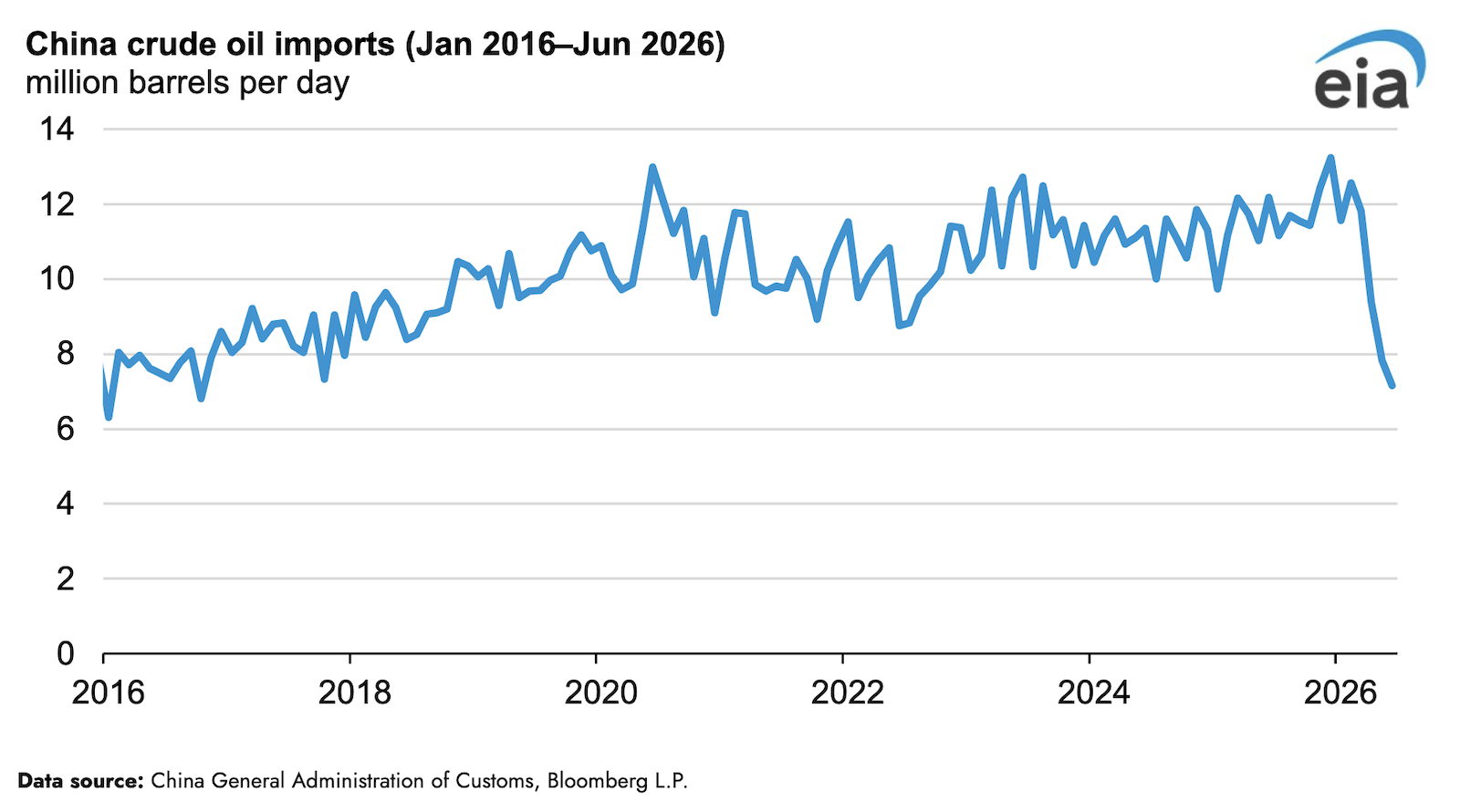
China, the world’s largest crude oil importer, reduced its crude oil purchases during the second quarter of 2026 following elevated global prices caused by supply disruptions through the Strait of Hormuz. According to data from China’s General Administration of Customs, the nation imported an average of 8.1 million barrels per day during the period, representing a substantial 32% decrease from the first quarter. During May and June specifically, imports fell below 8.0 million barrels per day for the first time since 2016.
This recent pullback stands in contrast to the import patterns of the preceding months. Throughout 2025, China achieved record crude oil imports averaging 11.6 million barrels per day annually as the country expanded its strategic reserves during a period of lower global prices. This elevated import pace continued into early 2026, with China averaging 12.0 million barrels per day during the second half of 2025 and into February 2026.
Analysis of tanker traffic patterns indicates that the decline in imports came primarily from waterborne shipments rather than pipeline deliveries, which remained relatively stable. The most significant reductions in seaborne imports occurred in supplies from Iraq, which decreased by 910,000 barrels per day, Russia—China’s leading supplier—which fell 640,000 barrels per day, and the United Arab Emirates, which dropped 600,000 barrels per day between quarters.
Refinery operations in China also declined during the period, processing 2.2 million barrels per day less crude oil compared to the first quarter. However, the reduction in imports of 3.9 million barrels per day outpaced the decline in refinery throughput, suggesting that crude oil inventory levels drew down during the quarter. On a global scale, record inventory reductions of 5.1 million barrels per day were estimated during the second quarter, a figure that analysts suggest would have been even larger absent the decrease in worldwide demand.
Article Attribution | Read More at Article Source
Article summary produced by Claude AI