

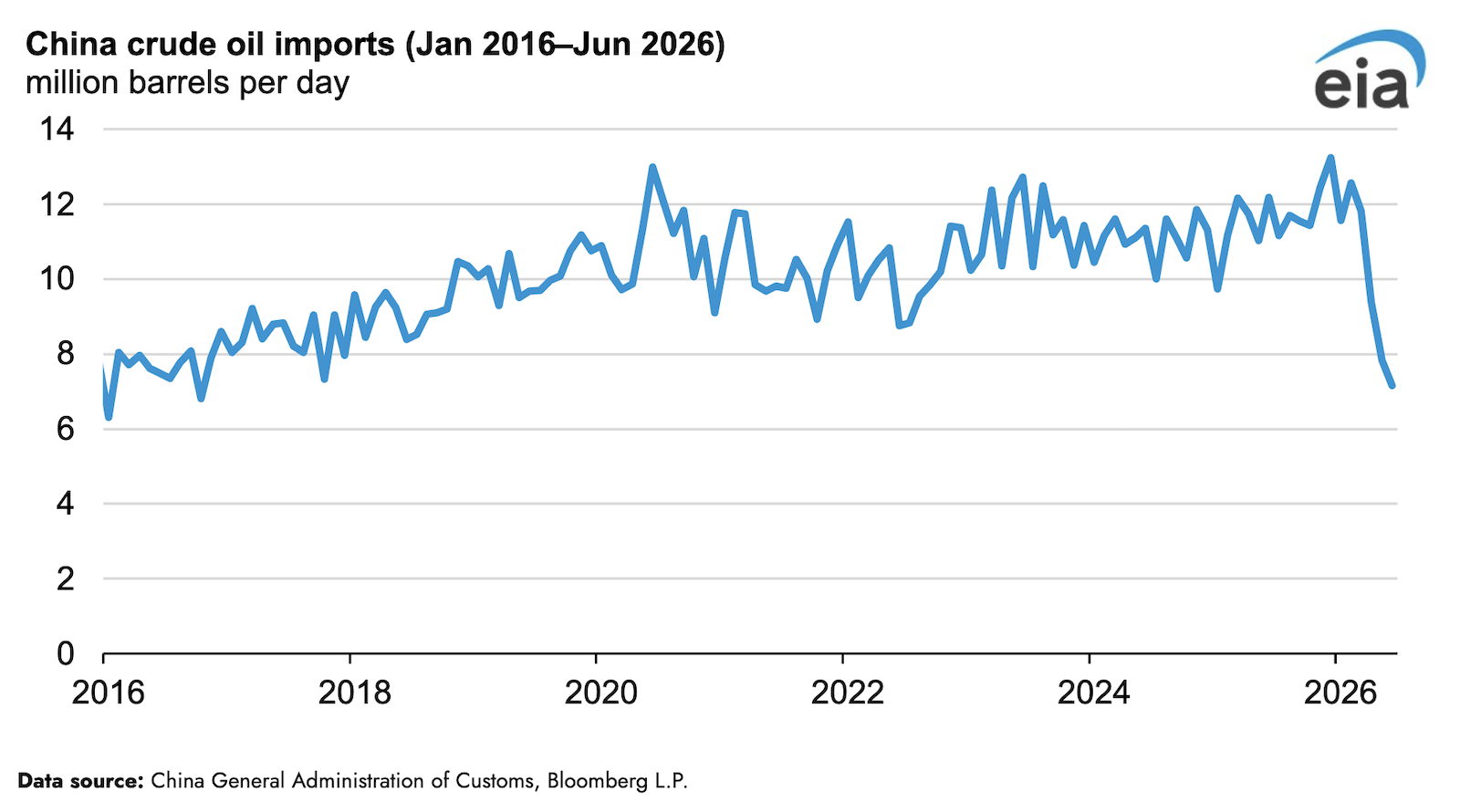
China, the world’s largest crude oil importer, significantly reduced its oil purchases during the second quarter of 2026 following elevated prices caused by supply disruptions in the Strait of Hormuz. According to customs data, China imported an average of 8.1 million barrels per day during the quarter, representing a substantial decline from the preceding three-month period. May and June shipments dipped below 8.0 million barrels per day for the first time since 2016, marking a notable contraction in the country’s energy acquisition.
This recent pullback contrasts sharply with China’s import patterns in the prior year. During 2025, China achieved record annual imports of 11.6 million barrels per day as the country expanded its strategic petroleum reserves when crude prices reached their lowest levels since 2020. Through the first two months of 2026, China maintained particularly high import volumes averaging 12.0 million barrels per day as it capitalized on favorable pricing conditions.
Analysis of tanker traffic data reveals that the decline in imports stemmed primarily from reduced waterborne shipments rather than pipeline deliveries, which remained relatively consistent. The most significant reductions in ocean-based imports occurred with crude from Iraq, which fell by 910,000 barrels per day, Russia—China’s leading supplier—down 640,000 barrels per day, and the United Arab Emirates, which declined by 600,000 barrels per day.
China’s crude oil refining capacity utilization declined less sharply than import levels, suggesting the country drew down inventory stocks to meet processing needs. Refineries processed 2.2 million barrels per day less crude oil during the second quarter compared to the first quarter, while imports fell by 3.9 million barrels per day. The differential between these figures indicates crude stocks were reduced to supplement refinery inputs.
Global inventory drawdowns during the second quarter reached estimated record levels of 5.1 million barrels per day. Analysts suggest this figure would have been higher if international demand had not also contracted in response to elevated price levels.
Article Attribution | Read More at Article Source
Article summary produced by Claude AI