

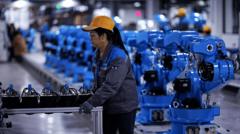
China is undertaking a comprehensive shift toward automation across its manufacturing sector, driven by both technological ambition and demographic necessity. The country currently operates more than two million industrial robots in factories—more than any other nation—and has become the world’s leading manufacturer of industrial robots, now producing over half of all robots globally. This transformation represents a core component of Chinese leader Xi Jinping’s $20 billion innovation initiative designed to establish the country as a technological leader in direct competition with the United States.
The automation push extends beyond factories into educational institutions. Purpose-built vocational schools such as the Hangzhou Technician Institute are training large cohorts of college students in robotics programming, AI development, and maintenance of automated systems. Educators in these programs emphasize that workers must adapt to technological change or risk displacement. On factory floors across cities like Chengdu and Hangzhou, industrial robots work alongside human employees performing welding, painting, assembly, and other repetitive tasks continuously without breaks.
Demographic pressures are accelerating this transition. China faces a shrinking population and aging workforce, with official estimates projecting that more than one-third of the population will exceed age 60 by 2035. The country is expected to lose approximately 60 million people over the next decade. These trends have prompted policymakers to prioritize automation to maintain productivity and economic growth before labor shortages intensify.
However, the speed and scale of this transformation present significant challenges. Approximately 120 million workers currently depend on manufacturing sector employment. If automation accelerates too rapidly, widespread job losses could destabilize the economy and impact millions of workers reliant on factory wages. Some robotics developers acknowledge that while machines can operate continuously, they also require regular maintenance and inspection, creating ongoing roles for human workers. The long-term employment impact of China’s automation revolution remains uncertain in a context where comprehensive data about workforce transitions is difficult to access independently.
Article Attribution | Read More at Article Source
Article summary produced by Claude AI