

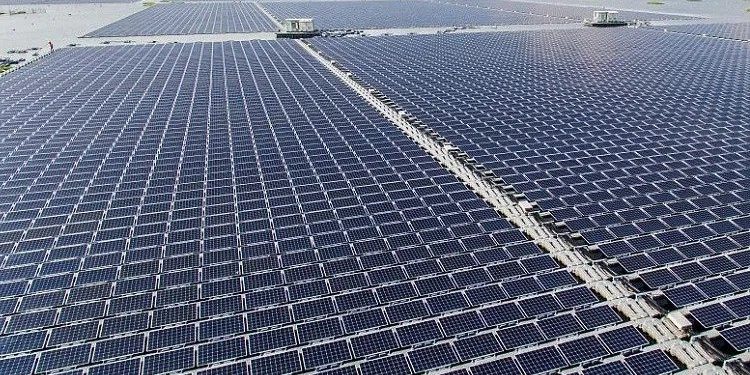
China’s solar sector is entering a more mature phase characterized by slower growth and structural challenges following years of record expansion. The industry now confronts multiple pressures including declining installation rates, transition to market-oriented electricity pricing, significant manufacturing overcapacity, and accelerating technological competition. These developments mark a transition from a period focused primarily on capacity expansion toward an industry emphasizing system integration, storage solutions, and technological efficiency gains.
According to the National Energy Administration, China installed 72.07 gigawatts of solar capacity in the first half of 2026, bringing total photovoltaic capacity to 1.27 terawatts with an average utilization rate of 91.4%. This performance represents a substantial deceleration compared to 2025, when the country added more than 315 gigawatts. Installation rates in early months showed year-on-year declines exceeding 17%, as developers rushed to complete projects ahead of changes to the feed-in-tariff system. The shift toward market-based pricing beginning in 2026 has fundamentally altered the economic landscape for new solar developments.
Managing increased variable renewable generation on the grid has become a critical concern as solar and wind capacity now approach half of China’s total installed generating capacity. Wind generation reached 679 gigawatts by mid-2026 alongside solar capacity. Energy storage has emerged as a key growth area, with new capacity reaching 153 gigawatts by the end of June, representing a 61% year-on-year increase. Market-based electricity trading has expanded substantially, with 3.685 trillion kilowatt-hours traded during the first half of 2026, up 24.2% from the previous year.
China maintains dominance as the world’s primary solar manufacturing hub despite domestic market pressures. Solar panel exports exceeded 35 gigawatts in early months, though representing a 9% decline year-on-year. Exports reached record levels of 68 gigawatts in March before the government removed the value-added tax export rebate for photovoltaic products on April 1, 2026, a policy change aimed at reducing trade frictions and managing overcapacity. The rebate removal caused export declines in subsequent months, though shipments to Southeast Asia, South Asia, and Africa remained strong. Manufacturing capacity continues to exceed domestic absorption, driving companies to develop geographically distributed supply chains through cell exports and component manufacturing partnerships overseas.
Technological advancement remains critical for competitiveness in the constrained market environment. Commercial module efficiencies reached 25% for back-contact products, 24.1% for TOPCon products, and 23.8% for heterojunction products during the first half of 2026. Growing electricity demand, which rose 5.3% in the period, continues to provide expanding opportunities for renewable energy integration within the domestic market.
Article Attribution | Read More at Article Source
Article summary produced by Claude AI