

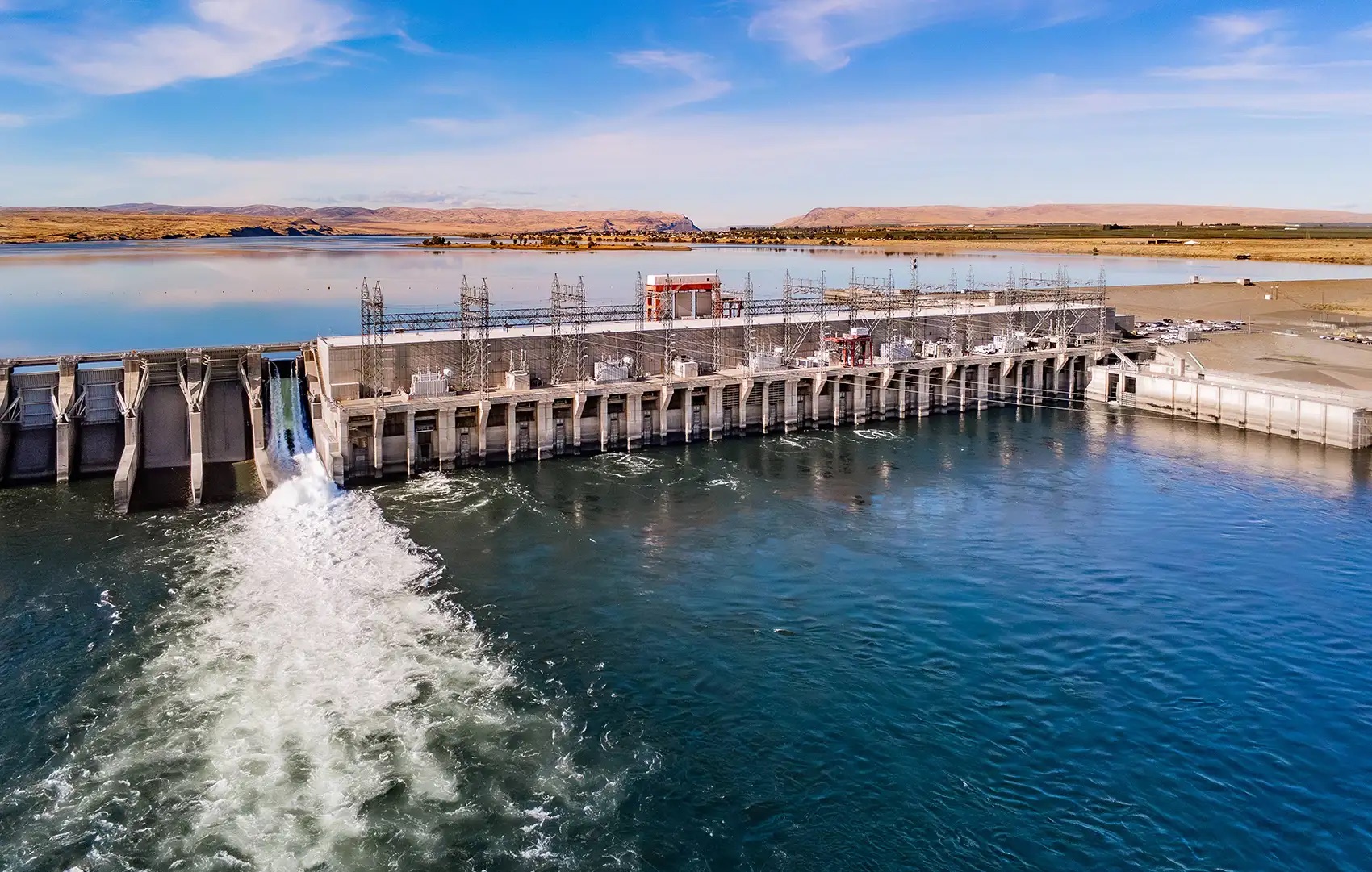
Grant Public Utility District partnered with the National Laboratory of the Rockies to evaluate how coordinated operations among hydropower plants in Washington state’s Mid-Columbia system could affect power generation and efficiency. The research project, funded by the U.S. Department of Energy’s Hydropower and Hydrokinetic Office, sought to model the benefits of synchronized dam operations across the cascading system of seven facilities operated by different entities.
The Mid-Columbia hydropower system presents a notable case study for coordination challenges, as water released from upstream dams directly influences operations at downstream facilities. Grant PUD manages the final two dams in the cascade—Wanapum and Priest Rapids—and faces additional operational constraints due to downstream environmental considerations, including salmon spawning grounds along the Columbia River’s longest free-flowing stretch. The utility sought to understand whether coordinated operations could enhance efficiency while maintaining reliability for its customers and environmental protections.
Researchers developed modeling scenarios comparing a fully coordinated system, in which all seven dams operated as a single dispatched unit to minimize production costs across the Western Interconnection, against an uncoordinated scenario where dams operated in separate groups according to ownership. The coordinated approach demonstrated measurable benefits: all seven dams increased annual electricity generation, with revenue gains ranging from 2.8 percent to 4.3 percent annually, and overall revenue across the system rising by 3.3 percent. The modeling showed that coordination enabled operators to optimize water storage and reduce spillage, resulting in greater electricity production during high-value market hours.
The research also indicated that coordinated operations could help dam operators better prepare for and respond to grid stress events. Insights from the study may inform broader decisions across the Western Interconnection as utilities evaluate participation in developing day-ahead markets. For Grant PUD, the collaboration combined the utility’s extensive operational knowledge with NLR’s large-scale grid modeling tools to address strategic decisions specific to its circumstances while generating findings applicable to other hydropower operators and energy planners.
Article Attribution | Read More at Article Source
Article summary produced by Claude AI