

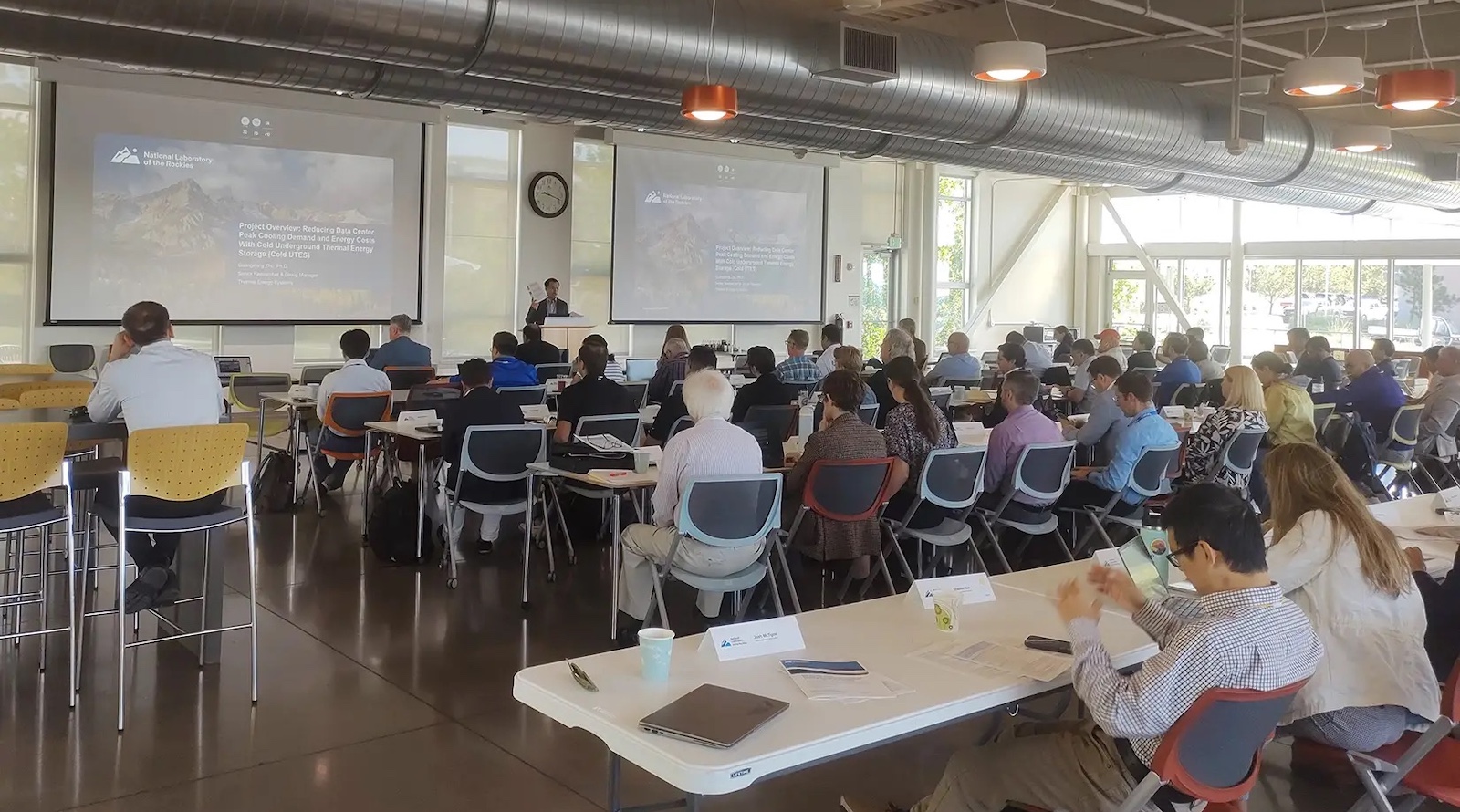
Researchers at the National Laboratory of the Rockies have completed a comprehensive analysis showing that cold underground thermal energy storage (cold UTES) offers significant economic and operational benefits for computing facilities. The technology captures thermal energy from cold ambient air during winter months or cool nights, storing it in subsurface reservoirs or boreholes for use when needed. This approach addresses a critical challenge in data center operations, as cooling systems typically consume approximately 40% of annual energy usage.
In partnership with Lawrence Berkeley National Laboratory, the University of Chicago, and Princeton University, the research team modeled cold UTES deployment across 12 data centers located in Arizona and Virginia. Using advanced computational tools including facility-level and grid-level modeling, researchers assessed how shifting cooling electricity demand to low-demand hours could reduce operational costs. Results indicated that at a Virginia demonstration site, annual electricity costs for cooling could decrease by 70%, potentially saving approximately $20 million annually for a 1-gigawatt facility. The analysis also showed potential infrastructure savings ranging from $90 million to $390 million through reduced chiller equipment purchases and grid infrastructure investments.
Findings from the project were presented at a workshop held on June 30–July 1, 2026, at the National Laboratory’s campus in Golden, Colorado, which drew over 100 participants from research institutions and industry. Beyond immediate cost savings, cold UTES deployment could alleviate grid strain, allowing additional electrical capacity to support computational processing rather than cooling operations.
The Department of Energy’s Office of Geothermal has launched a follow-up initiative called the Underground Thermal Energy Storage Collaboration, led by the National Laboratory of the Rockies with involvement from four national laboratories. This three-year effort aims to develop commercial-scale demonstration sites and expand research into related geothermal storage technologies, including hot UTES for industrial heating and power generation applications. The collaboration will utilize advanced research platforms to evaluate how these storage systems integrate with broader energy infrastructure at real-world scales.
Article Attribution | Read More at Article Source
Article summary produced by Claude AI