

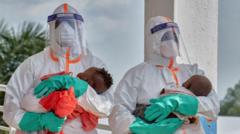
The World Health Organization has confirmed that the Democratic Republic of Congo is facing an unprecedented Ebola crisis. As of 30 July, the outbreak had resulted in 3,605 confirmed cases with 1,587 deaths, representing a 44% fatality rate. This outbreak, caused by the Bundibugyo strain, exceeds the scale of the country’s previous largest epidemic, which occurred between 2018 and 2020 and resulted in nearly 3,500 cases with approximately 2,300 deaths.
The WHO reported that transmission is accelerating significantly. During the week preceding the assessment, the outbreak reached its highest weekly total with 567 new cases and 296 deaths. Officials characterized the pace of transmission as exceptional and noted that the situation continues to intensify with sustained transmission patterns and ongoing increases in both case counts and mortality figures.
The primary outbreak center is located in Ituri province in the northeastern region, which shares borders with South Sudan and Uganda. However, the virus has spread to additional areas within the country, including North and South Kivu provinces, where armed group activity complicates public health responses. The WHO identified multiple factors that are accelerating spread and hindering containment efforts, including ongoing insecurity, population displacement, and cross-border movement patterns.
The outbreak has extended beyond the Democratic Republic of Congo’s borders, with 20 cases reported in Uganda and one confirmed case in France. Two cases initially diagnosed in the country were subsequently treated in Germany. Currently, no approved vaccine or treatment exists specifically for the Bundibugyo strain, though vaccine development efforts are underway. On 30 July, the WHO identified a vaccine candidate being developed in Singapore as the most promising option, while a separate vaccine trial has commenced in the UK.
Article Attribution | Read More at Article Source
Article summary produced by Claude AI