

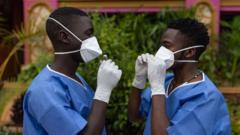
The Ebola outbreak declared in May has affected two neighboring countries with starkly different outcomes. The Democratic Republic of Congo has recorded over 1,500 deaths, making it the second-worst outbreak on record, with health authorities reporting that transmission is accelerating faster than in previous outbreaks. In contrast, Uganda has successfully contained the virus, recording only 20 cases and two deaths before declaring the country Ebola-free two weeks ago.
Uganda’s containment success stemmed from multiple factors, according to health officials and the World Health Organization. The country had activated a specialized treatment facility at Mulago hospital in Kampala that retained medical supplies and emergency teams from a previous outbreak. Once cases were identified, authorities isolated patients in dedicated treatment units rather than allowing them to spread through general hospitals, limiting community transmission. Uganda also implemented strict contact tracing, quarantining over 6,000 known contacts for 21-day isolation periods. Border closure between the two countries, though economically costly, prevented further virus movement.
The Democratic Republic of Congo faced significant obstacles in its response. Before detecting the outbreak, the virus spread undetected for weeks because health officials tested for common Ebola species rather than the rare Bundibugyo strain responsible for the current outbreak. Field investigators reported that surveillance efforts were hampered by poor planning, logistical challenges, and inexperienced staff. Security concerns in Ituri province, where the outbreak centered, compounded difficulties as military operations and armed group conflicts displaced millions and disrupted tracking efforts. Artisanal mining and cross-border commerce further facilitated virus spread through constant population movement.
Uganda’s advantage included early warning from DR Congo’s public outbreak declaration, allowing rapid activation of containment measures. Government officials emphasized that preparedness, rather than chance, prevented wider transmission. Community cooperation proved critical, with the public maintaining precautions even after official declarations of being Ebola-free. Uganda’s health infrastructure had been strengthened through previous outbreaks and past public health successes, including HIV prevention campaigns in earlier decades.
Looking forward, Uganda acknowledged vulnerability due to its porous border with Ituri and has dispatched healthcare workers to assist DR Congo. Officials emphasized that Uganda’s long-term security depends on successfully controlling the outbreak in the neighboring country through continued screening, public education, and cross-border cooperation.
Article Attribution | Read More at Article Source
Article summary produced by Claude AI