

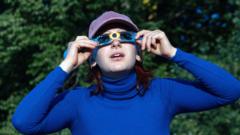
Following a partial eclipse visible in the UK, eye care professionals are advising the public to watch for signs of retinal damage from unprotected sun exposure. The potential symptoms of eye injury include blurred vision, a dark or blind spot in the center of the visual field, eye pain, redness, grittiness, sudden vision changes, and heightened sensitivity to light.
Damage to the eye occurs when unprotected staring at the sun causes harm to the retina, the light-sensitive tissue at the back of the eye, particularly affecting cells responsible for central vision. This condition, known as solar retinopathy, results from the sun’s intense brightness and ultraviolet radiation. A significant factor in eye injury during eclipses is that the partial obscuring of the sun by the moon may suppress the normal instinctive response to look away. Additionally, because the retina lacks pain receptors, individuals may not immediately perceive the damage occurring.
According to Alexander Ionides, a consultant eye surgeon at Moorfields Eye Hospital in London, symptoms typically begin appearing within several hours of exposure. He described the visual disturbance as a grey, yellow, or dark spot appearing in the center of vision, which may gradually worsen. Those suspecting eye damage should seek urgent medical attention through local opticians, who can perform retinal scans to detect solar retinopathy, or through hospital eye casualty departments and eye units.
Historical precedent exists for eclipse-related vision injuries. Following the total eclipse visible in the UK in 1999, around 70 people sustained lasting sight damage, with some having looked at the sun for less than a minute. In comparison to that event, Ionides reported receiving substantially fewer inquiries and emergency visits following the recent partial eclipse, suggesting increased public awareness about the dangers of direct solar observation.
Article Attribution | Read More at Article Source
Article summary produced by Claude AI