

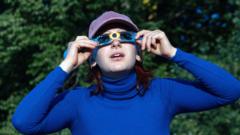
Medical professionals are advising the public to monitor their eyesight following a recent eclipse event, cautioning that damage to the eyes may not become immediately apparent. Vision impairment caused by eclipse observation can manifest through several specific symptoms, including blurred sight, the appearance of a dark or grey spot in the center of one’s visual field, and heightened light sensitivity.
The underlying cause of such injury involves damage to the retina, the light-sensitive tissue lining the back of the eye. When a person looks directly at the sun during an eclipse without appropriate protection, the retina’s cells responsible for detailed central vision become vulnerable to harm. The sun emits both intense visible light and ultraviolet radiation, which can trigger a condition termed solar retinopathy. A particular challenge in detecting eclipse-related eye damage is that the retina lacks pain receptors, making it difficult for individuals to notice injury as it occurs. Symptoms typically begin appearing several hours after exposure rather than immediately.
During an eclipse, people may lack their normal protective instinct to look away from the sun because of reduced brightness. This differs from typical sun exposure, when most individuals wince and avert their gaze instinctively. Eye experts stressed before the recent eclipse that only specially-designed solar eclipse glasses provide adequate protection, and that standard sunglasses or other devices are insufficient.
Historical precedent underscores the seriousness of the concern. Following the total eclipse visible in the UK in 1999, approximately 70 individuals sustained permanent vision damage. Many of these cases involved eclipse observation lasting less than a minute. The recent partial eclipse that occurred on Wednesday presented somewhat less risk, given that the sun remained comparatively bright, potentially discouraging direct viewing.
Consultant eye surgeon Alexander Ionides of Moorfields Eye Hospital advised those concerned about potential damage to seek urgent medical care. He outlined various symptoms warranting attention: eye pain, redness, grittiness or irritation, sudden sight changes, and light sensitivity. He noted that opticians and hospital eye units can perform retinal scans to identify solar retinopathy. Ionides observed that the recent eclipse generated fewer hospital contacts than the 1999 event, suggesting increased public awareness of the dangers.
Article Attribution | Read More at Article Source
Article summary produced by Claude AI